A Digital Horn is an advanced speaker capable of changing the audience areas to cover, by means of no movement — no change, no mechanical anything. All is done by DSP. Physically, it is a kind of screen of transducers, like the one on the image.
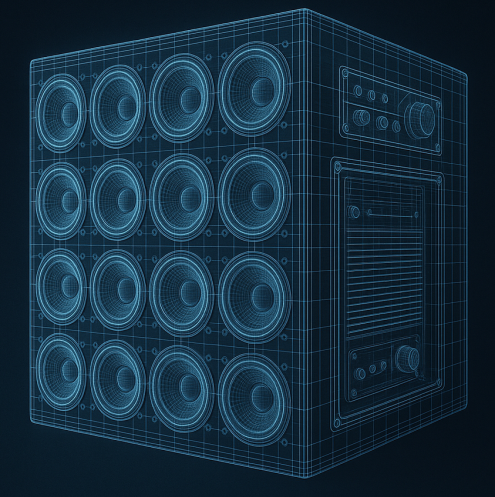
A 3D waveforming speaker using 16 transducers. The body of the idea.
Dimensions & aesthetics.
Aesthetically, a model controlling from 315 Hz to 10 kHz should not be so deep. One key feature of the Digital Horn is its immense, tremendous low profile. Real desired dimensions for a 20-driver unit: for a 3" driver, arranged as 4 drivers high by 5 drivers wide — frontal dimensions of about 12" tall, 15" wide, and most importantly, a maximum of 10" depth. Hopefully less.
That depth will absolutely be a work of art by the amplifier partner — to make a flattened circuitry, and so on.
Coverage — digital only, no tilting.
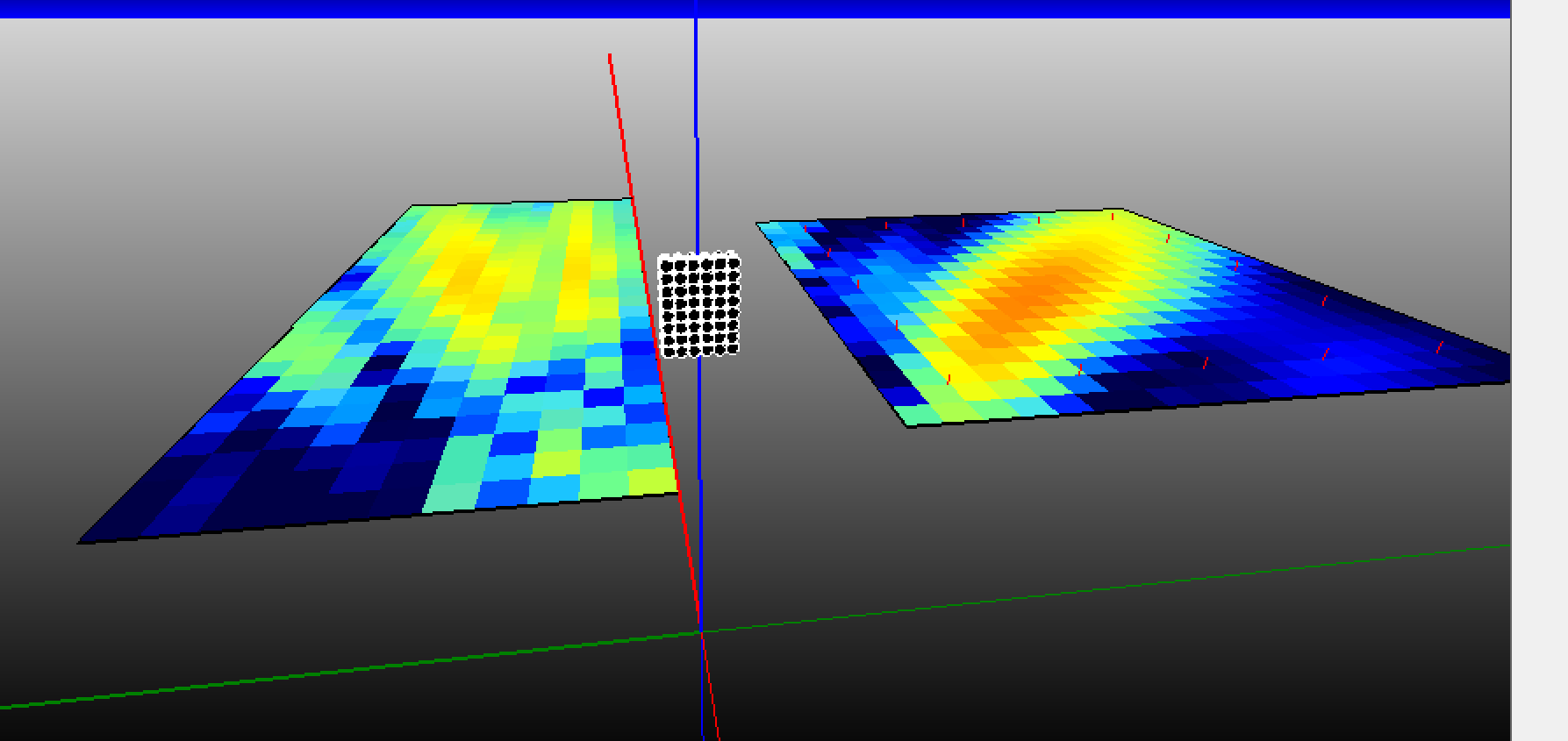
On these images there is no mechanical change at all. Nothing. The system remains straight; no tilting, no rotation — only digital control. Let's pay attention.
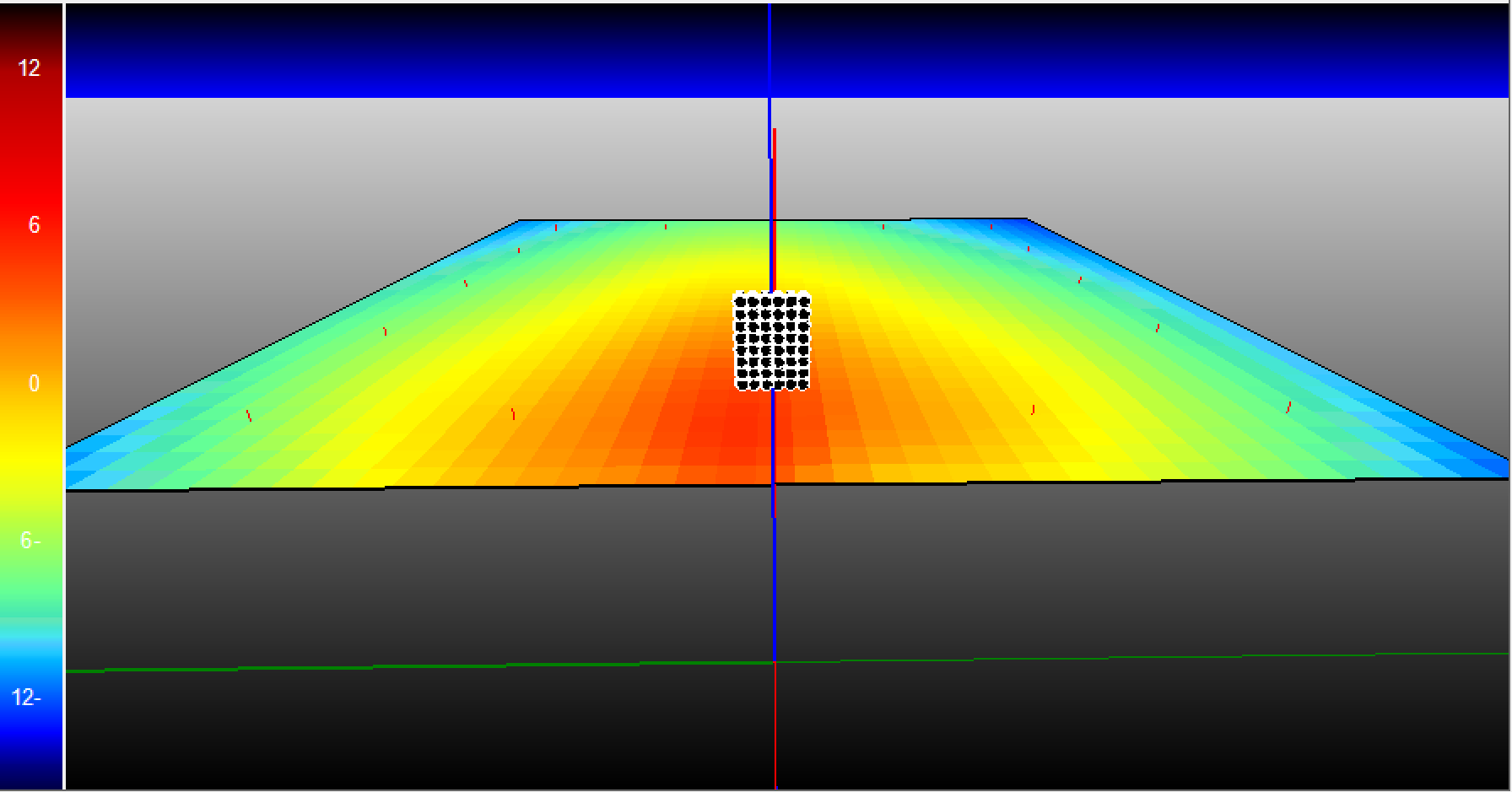
Back view of the system, using a very simple algorithm to cover the area.
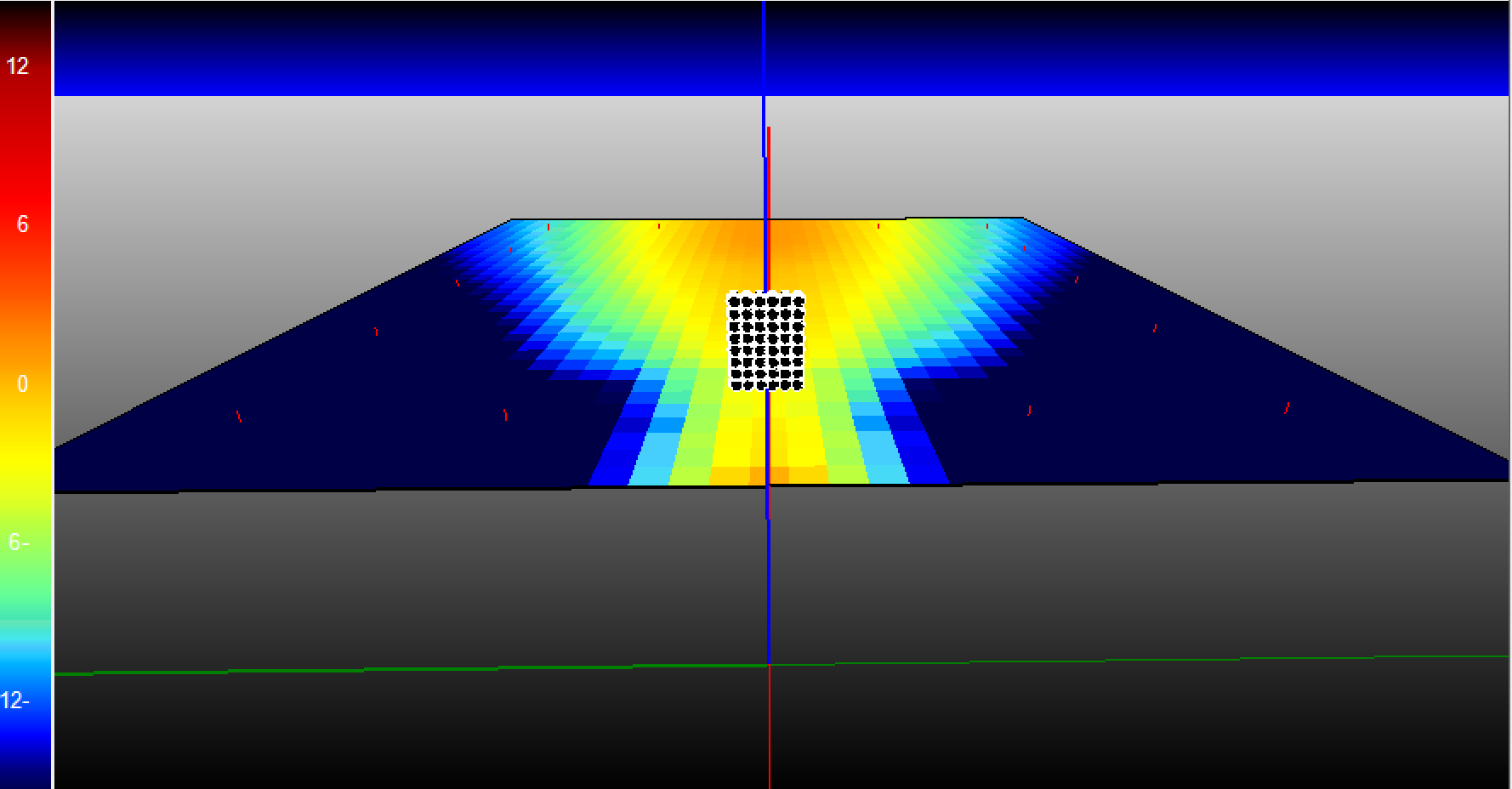
Exactly the same system, with no algorithm. Natural response for this 6-horizontal × 8-vertical Digital Horn.
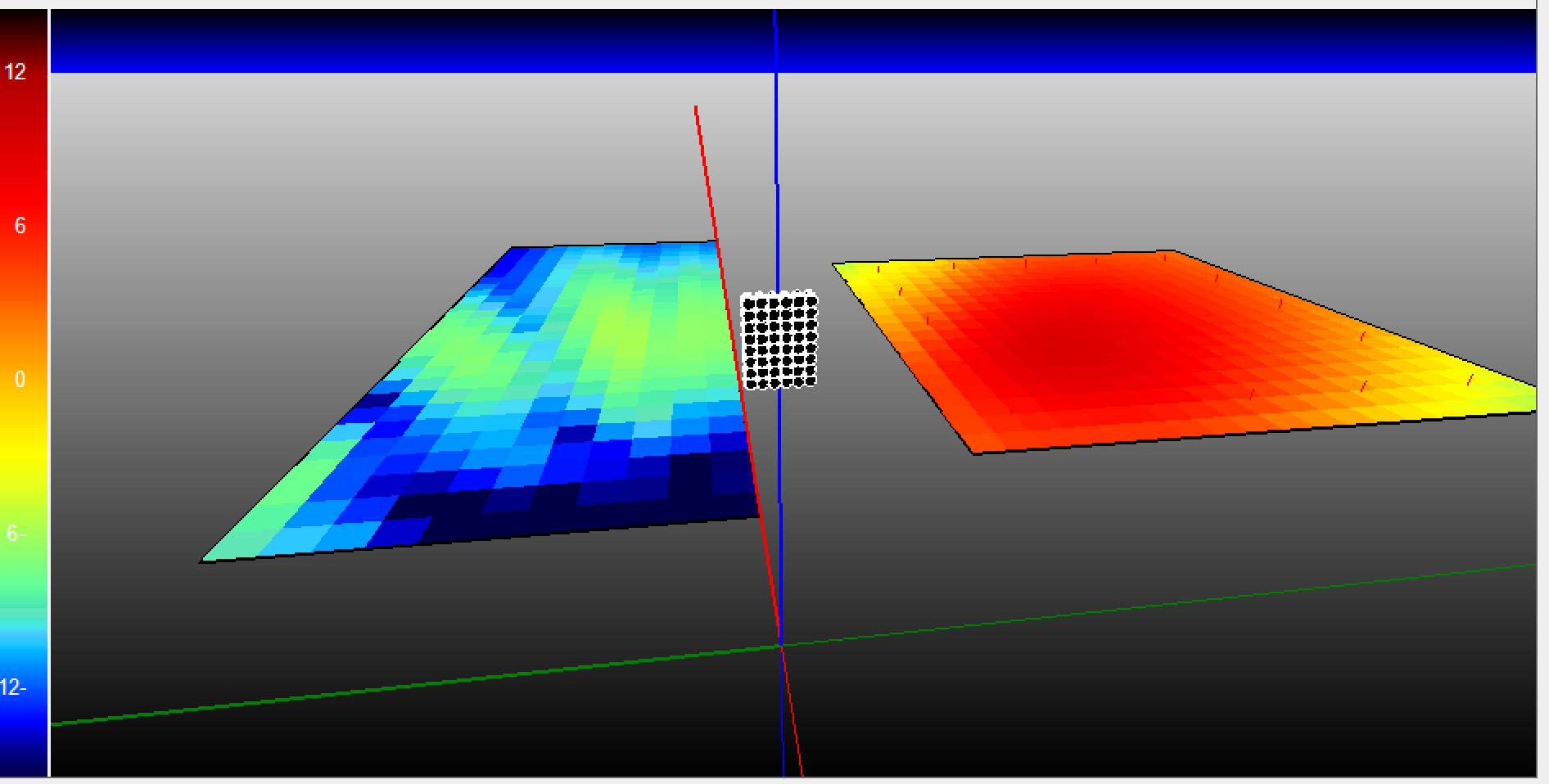
Same situation. We are covering the right audience area. For comparison we also simulate a fake audience area at the left — 30 dB of difference.
No tilting. No rotation. No mechanical anything. 30 dB between audiences.— what the algorithm alone can do
Back to 2D.
We also must go back to 2D — this is specially important for most of us. For Jason, it is gold. So we all are understanding what this is.
Back to 2D — the teaching shape of the problem.
Let's not fool ourselves. Physics is physics, and it will bother us when we go out of the lambda-separation laws. See this same example at 6.3 kHz — I don't like it, but our second unit will be in charge of this.
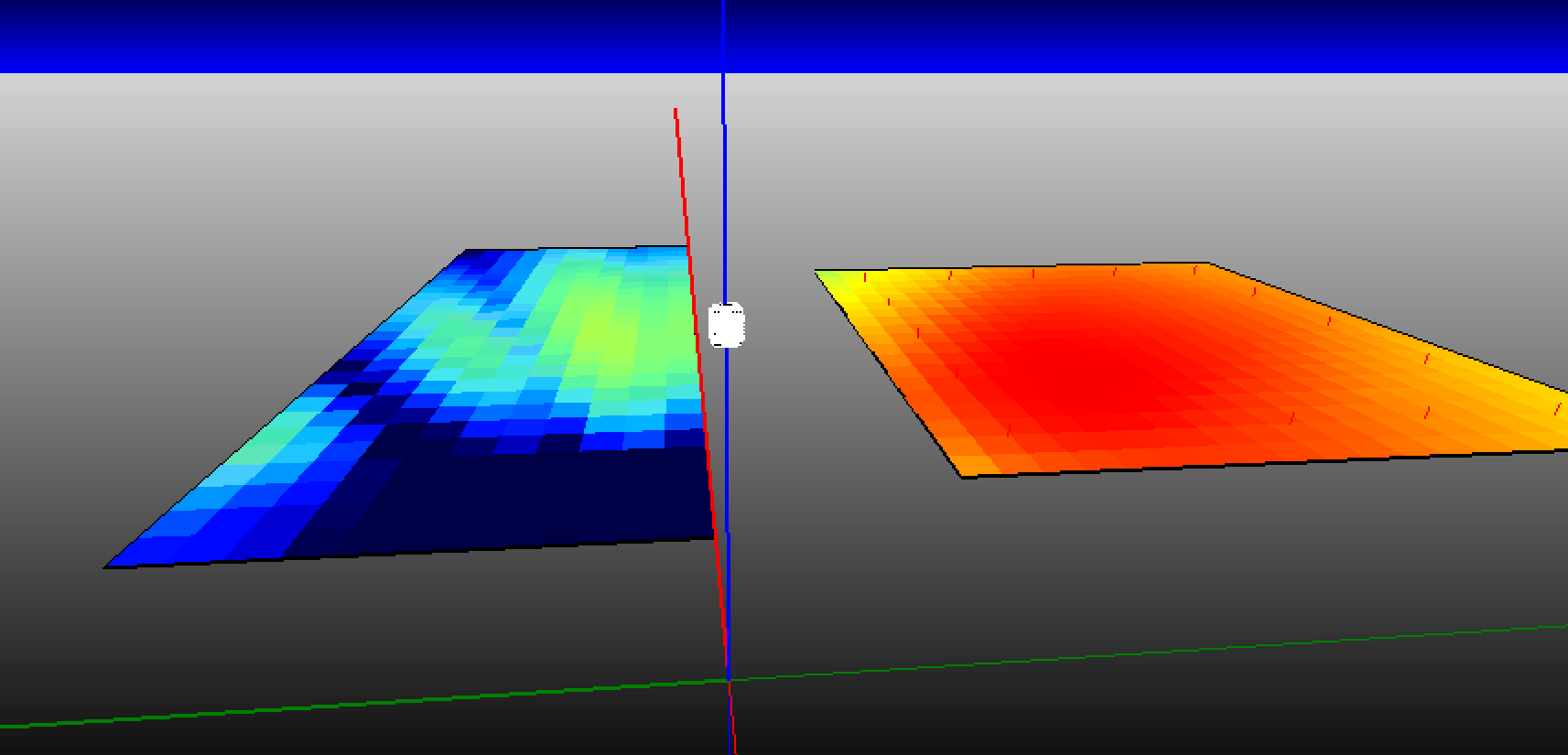
6.3 kHz, separation between sources of 1.5". On this case things get demanding — physics will not forgive lambda violations.
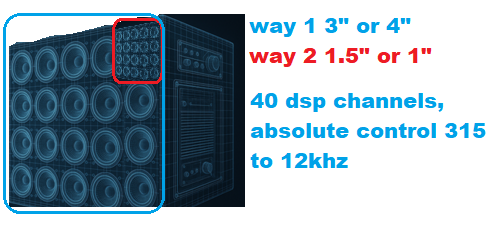
This even gets me like, wow, incredible. On this case we are up to 6.3 kHz and a separation between sources of 1.5 inches. This will be our Model 2 — total 40 DSP channels. People will pay. Yacht market. Big-boats market. Big-money market too.
The tooling.
The images above come from one of the main programs we will be working with for research. There are like three more independent programs for our job.
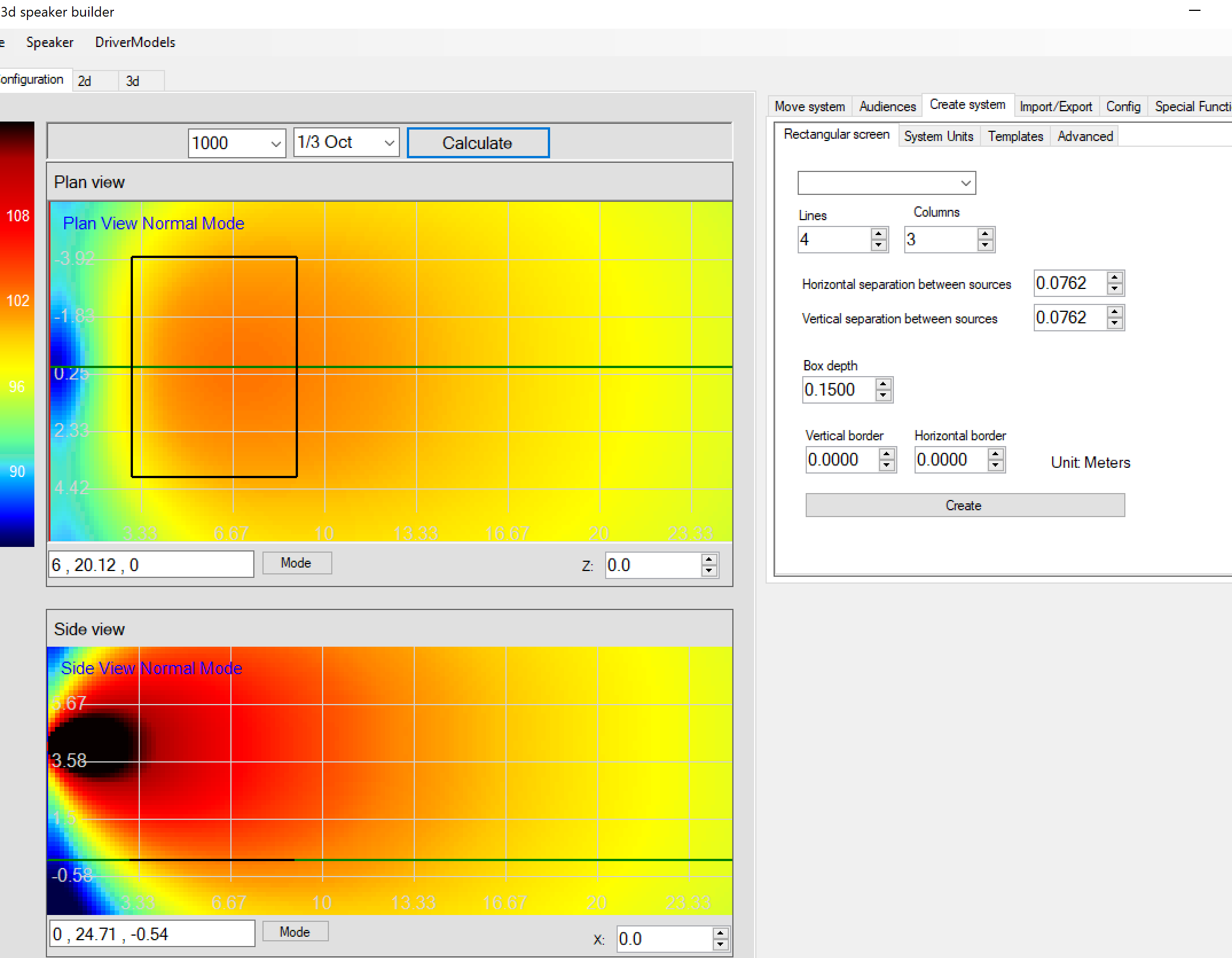
A suite with 2D and 3D integrated — very well.
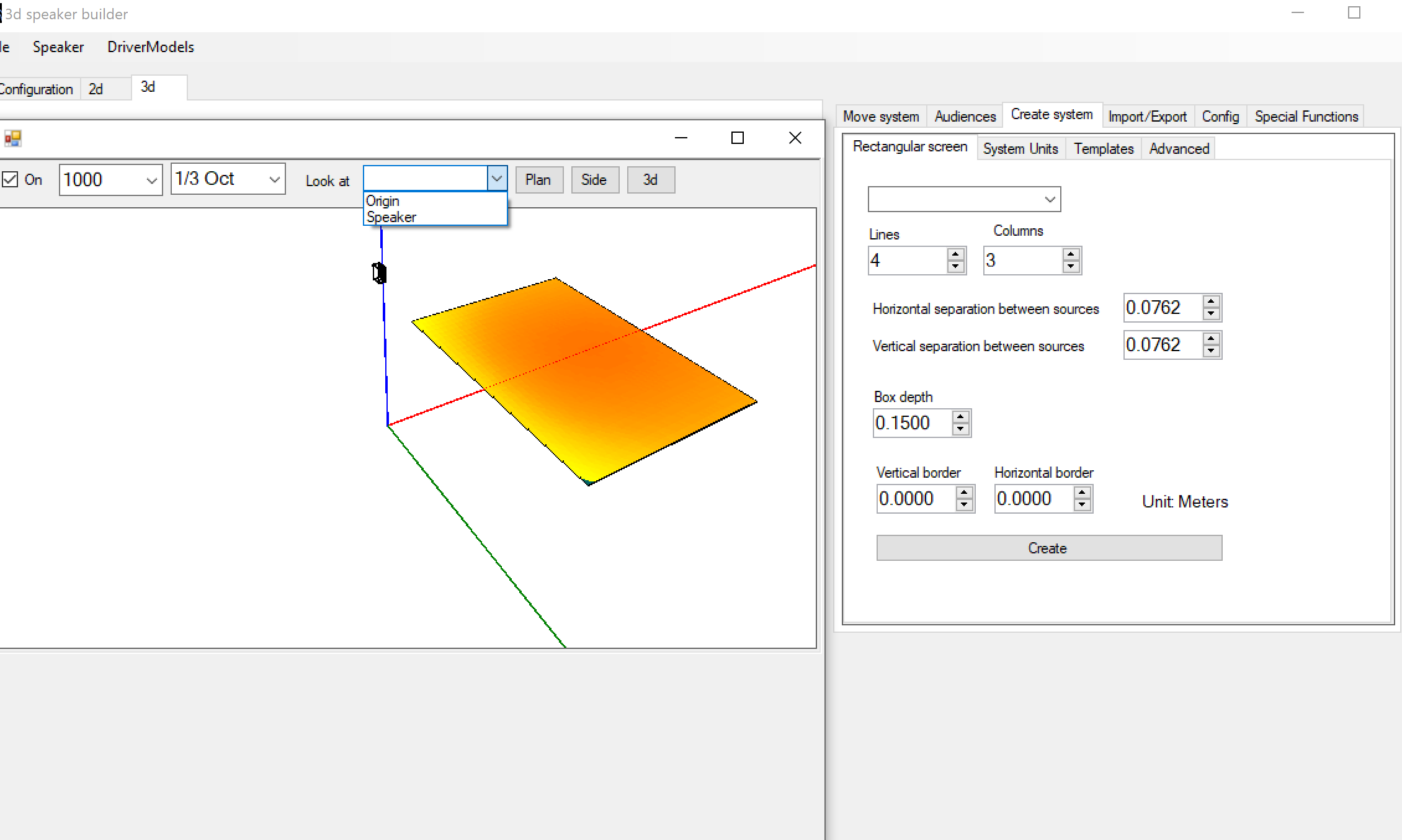
Wonderful 3D speaker creator. I can't wait to have you guys having fun with these toys.
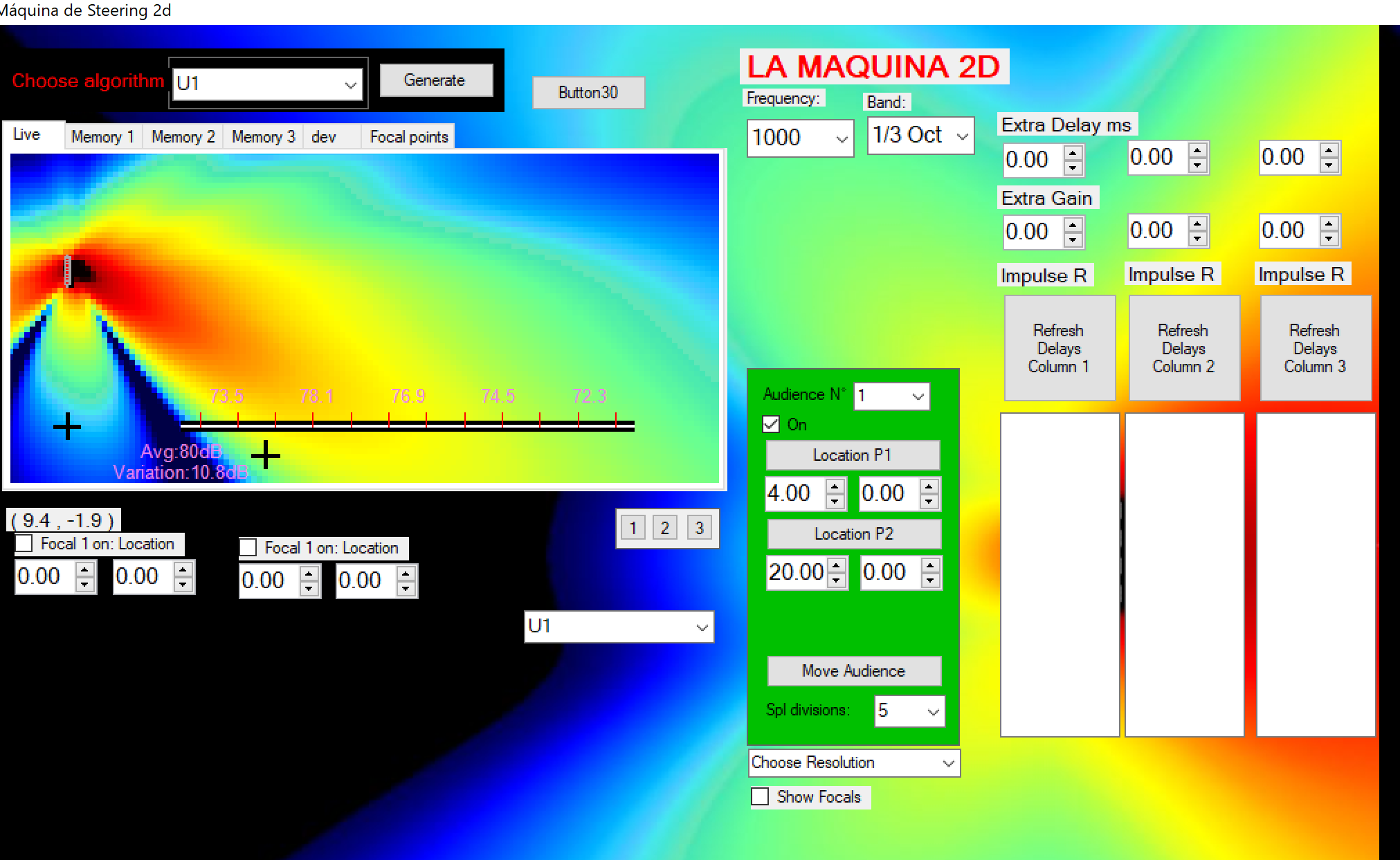
Another software tool — for 2D. I must say that 2D understanding of waveforming is equally important and a certainly good way to start digging.
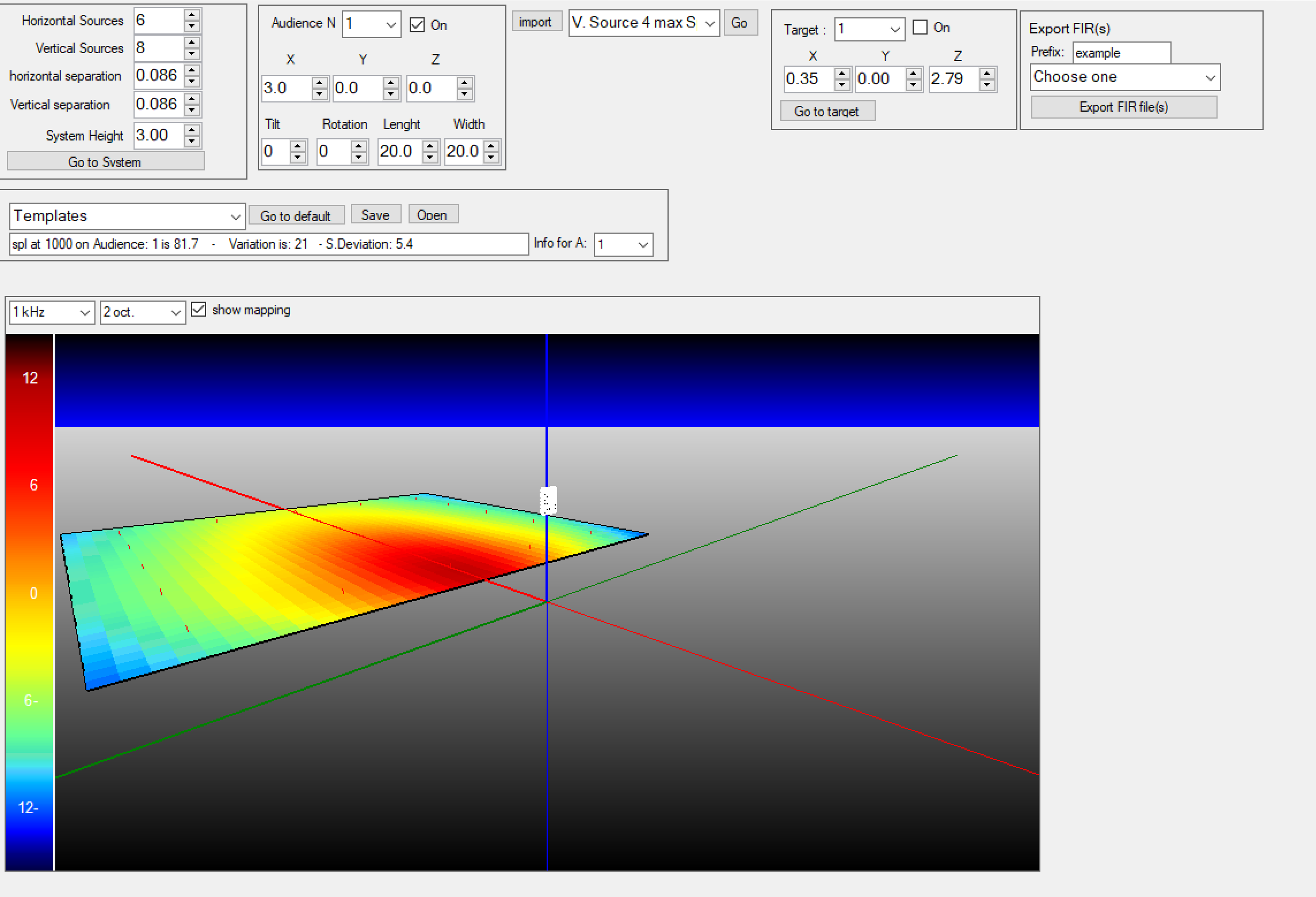
La Máquina 2D — a 2D beam-steering study app. Main 3D research thing is already capable of delivering the needed FIRs.
On supply-chain, people, politics.
For my colleagues here, the complete team — I must say that a lot, lot of the road is done. I must mention that on the soft, people, politics side of things, this is remarkably challenging because without, for instance, the close — very close — relationship with the amp/DSP vendor we will use, without a healthy and active relationship with this supplier, it is like we don't have one leg. This is important.
On the other side, it is good for me to show this software around — most of all to Tom, which along with Bill and Mike will supervise what we all build.
I will need things. I'll send Mike/Bill an email, I suppose — I need, now, 8 drivers 3" or 4". I already have a DSP by another (Chinese) brand that will help me doing the job, but I'm positive that is not the way to go. I ask for the contact of one engineer at the amp company.
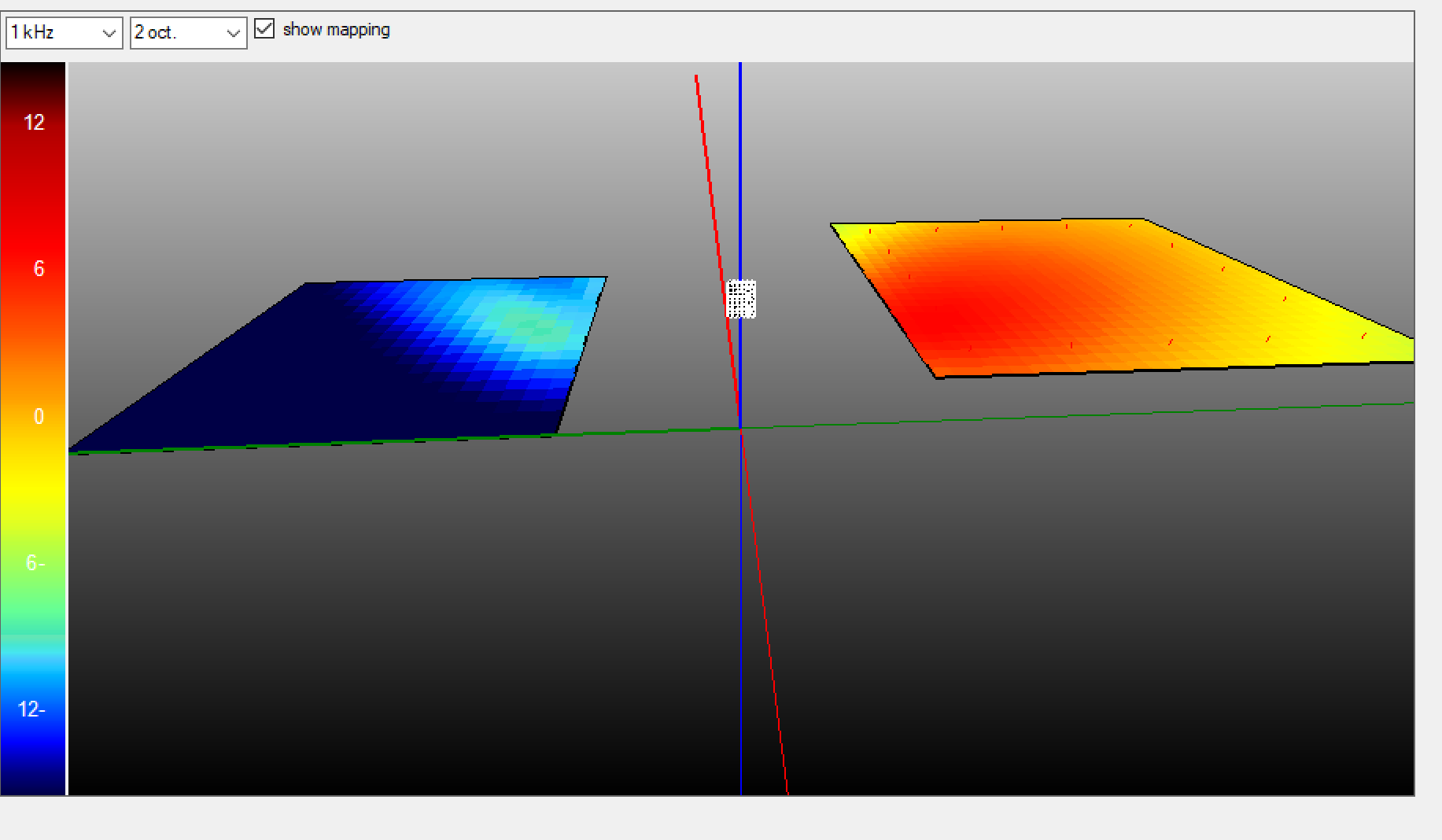
Closing image — until next diary.
Hope you liked it.
— Sebastián.