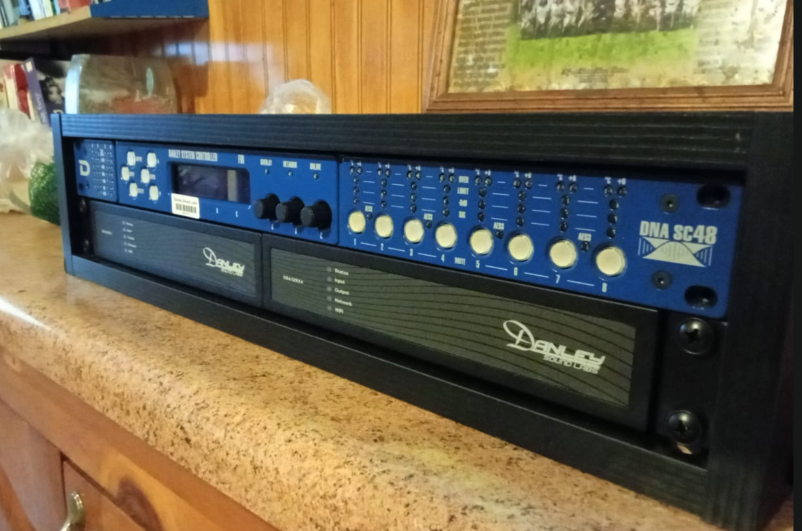
New toys arrived in Chile — many thanks.
This is a very exciting moment — both because I received this 8-channel processor plus amps, but mostly because I am creating advanced AI models for our program. The program has evolved, and currently we have several new algorithms working more or less well.
The Target algorithm — examples.
The Target algorithm, very simple and straightforward: we synchronise the N sources so they arrive at the same time to a single place, which we call the Target. See several examples.
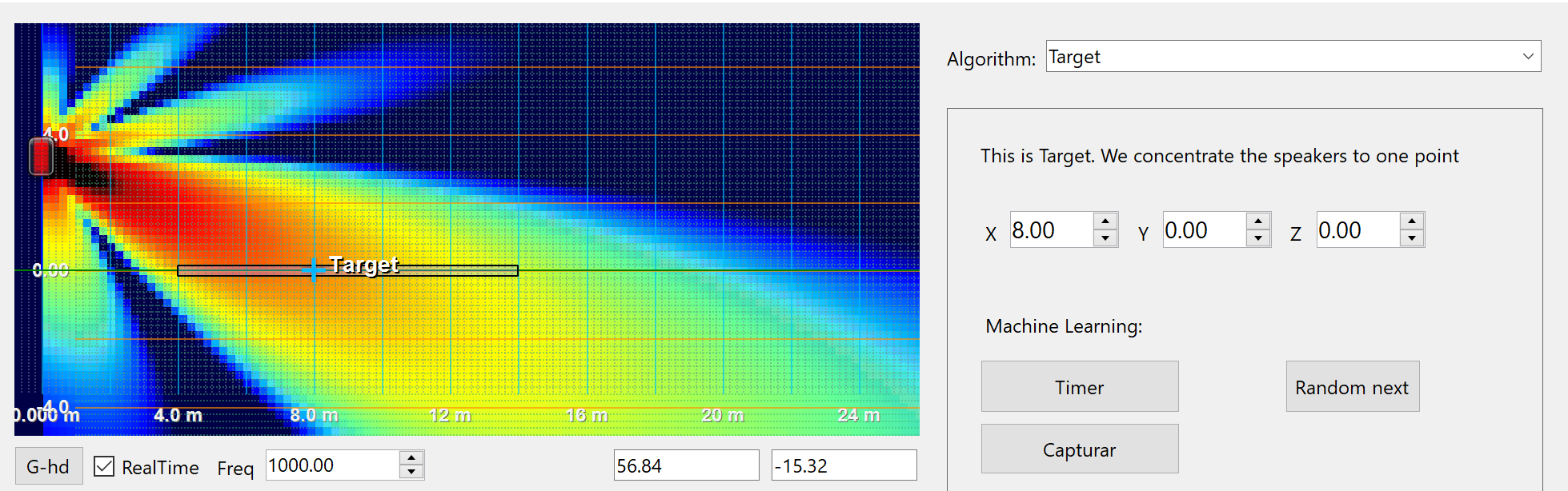
Target example 1 — arrivals synchronised.
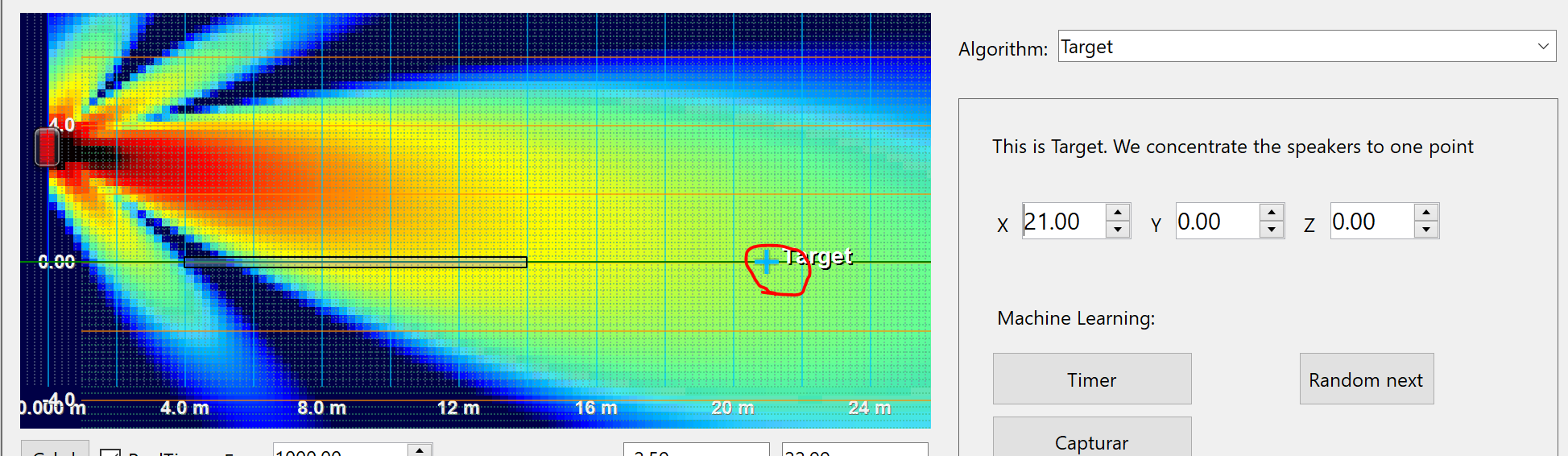
Target example 2.
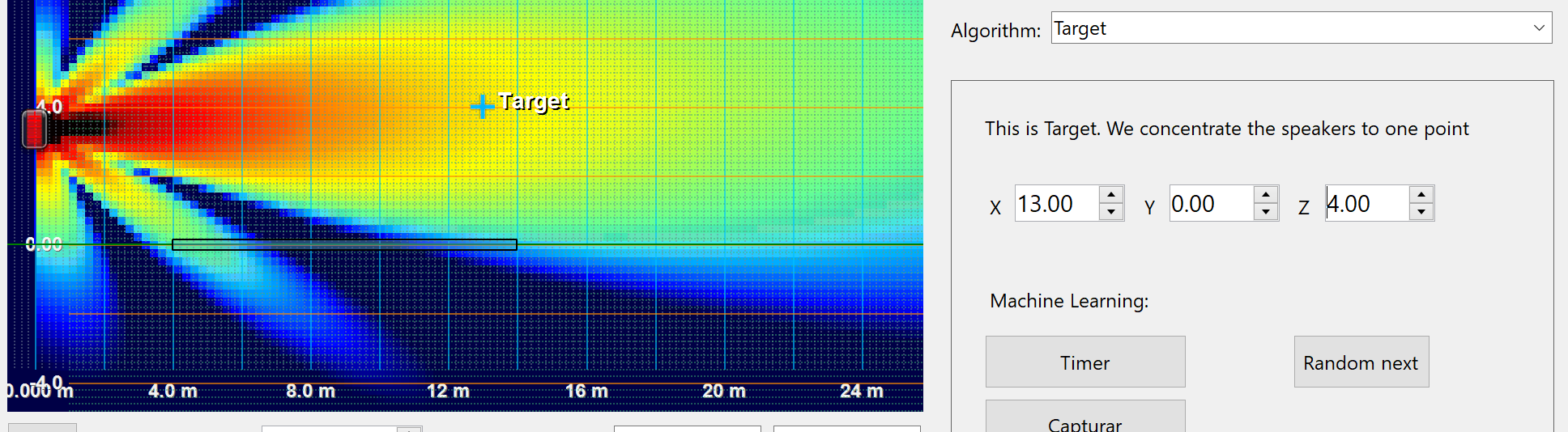
Target example 3.
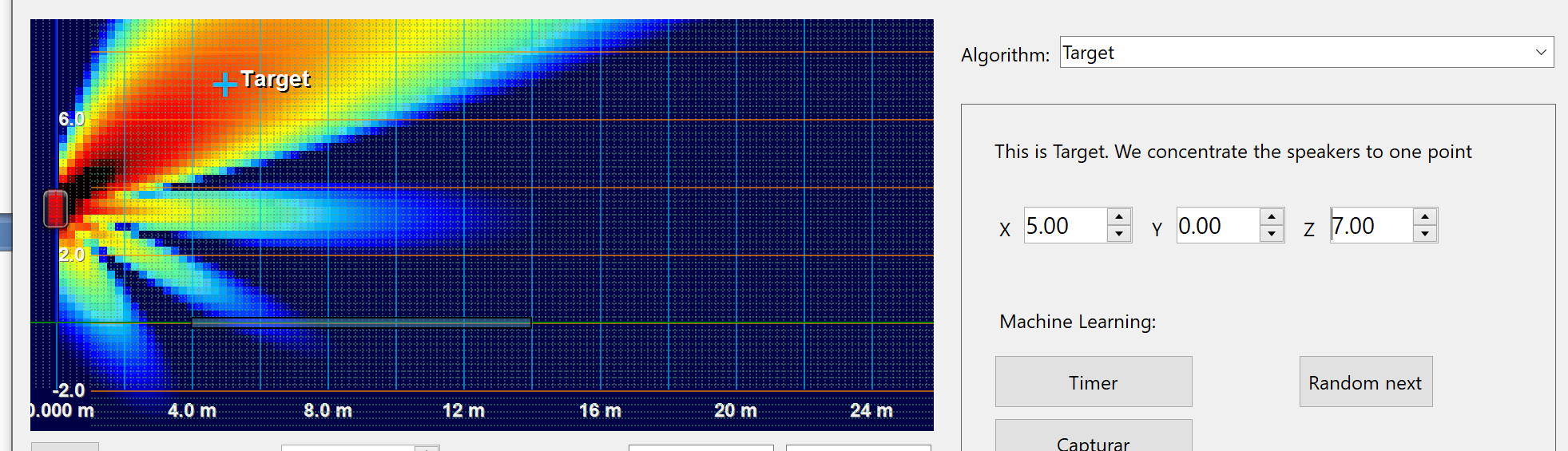
Even a vertical strong lobe.
Two machine-learning animals growing.
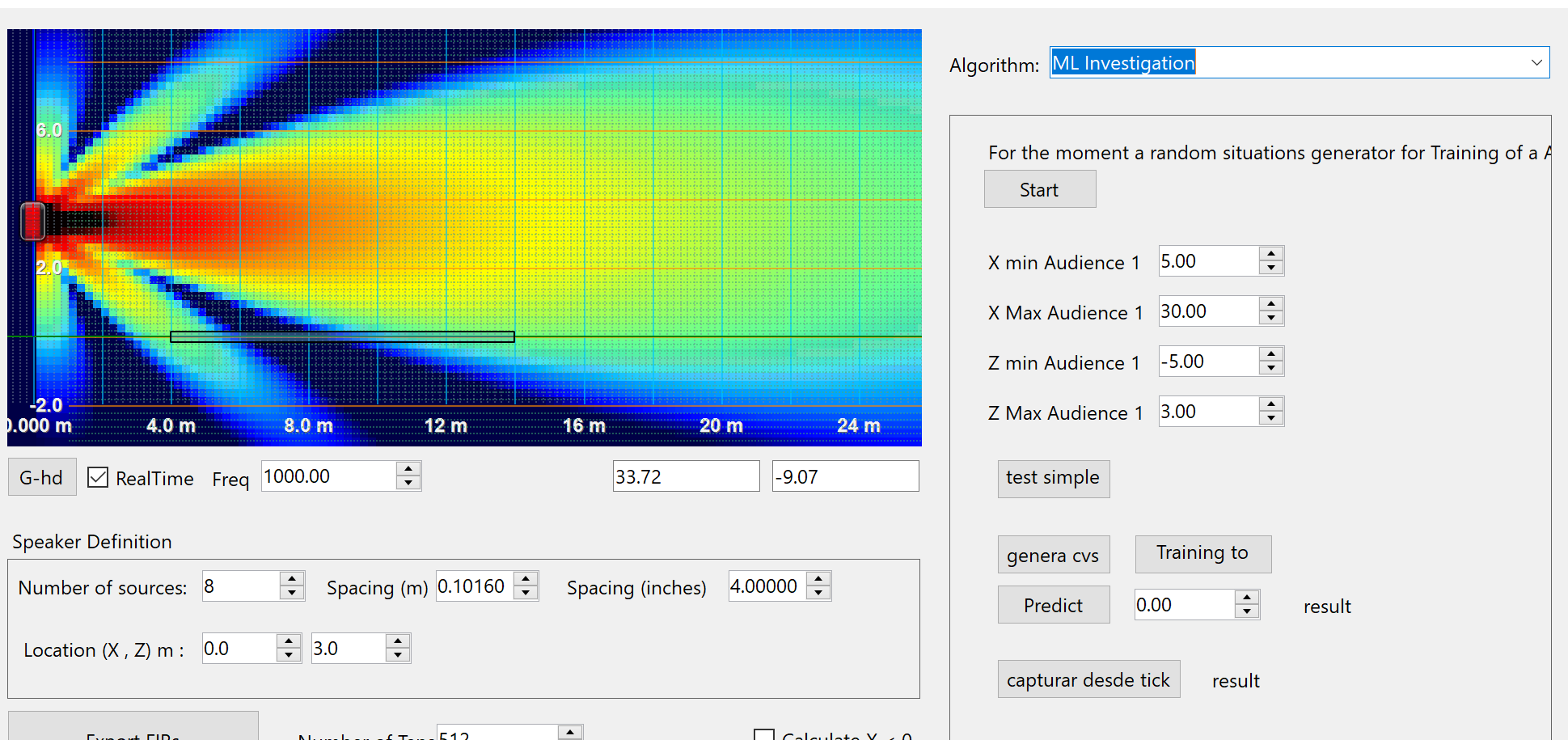
Two machine-learning animals are growing, as seen on the UI. This is N°1.
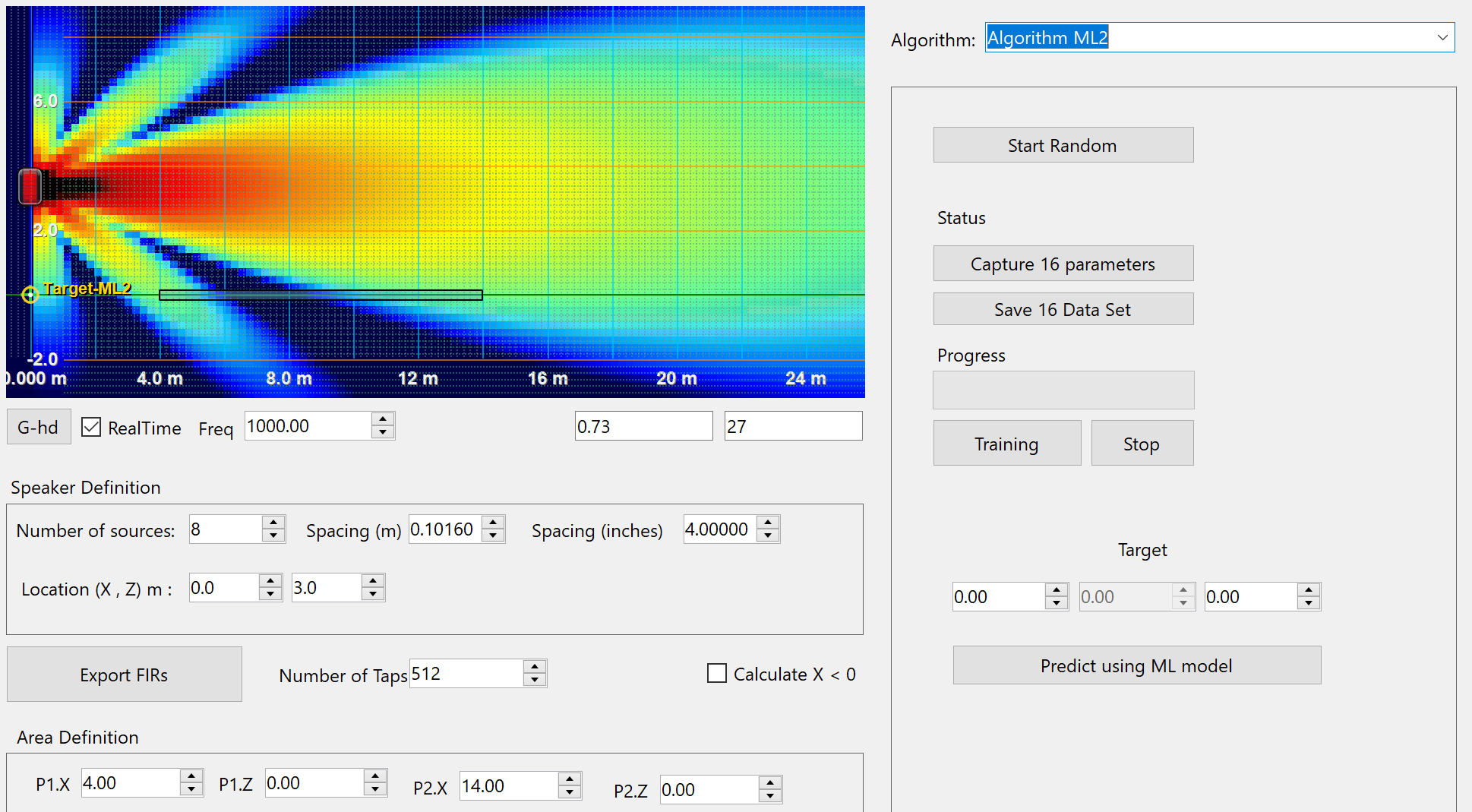
And this is N°2.
Once the model is created and running, it takes two or three milliseconds to do the calculation.— on the promise of ML regression
I still don't get into the coverage of a complete audience — instead of that, I am learning how to "teach" the model the basic Target approach. The process is done via the Microsoft ML.NET library, which is very good for this special kind of machine learning. It is a blessing to have the simulator to leave the thing learning by itself. Although I still can't show final results, you can see on the attached video how the training is taking place.
My first goal is that the system learns by itself how to make the Target algorithm — I am still on that endeavour. Then I must generalise to other algorithms, like the upcoming "Point-Open 2". The interesting issue is that once the model is created and running, inference takes only two or three milliseconds. ML.NET does something called regression, which is pretty common in AI systems.
On measurements.
I have the project of measuring my unit about 4 or 5 metres up in the air, via scaffolding that my guy will bring on a truck — and we will go to the open-space area I have. Now we are almost in summer, so climate is not a problem.
I will also need, at some point — as I have mentioned many times — to be in touch with the Linea Research programmers, to ask for a button to load multiple (8 by now) FIRs into the processor I received. This will not be a problem.
Next — best-fit algorithm, and superposition.
I will continue now on the creation of new algorithms and come up with a best-fit one for the moment. Then we can also concentrate on Superposition — remember, the technique that allows us to send separated beams. These separated beams are strategic for two things:
- Coverage of different areas from the same unit.
- Active muting of lobes. (This is long term.)
I will keep the work and let you know the advances. On the ML.NET machine learning, I think I am near something that generalises any given algorithm that can cover or point to given places. See the attached video, and how the thing produces random audience areas.
— Seb.