I got to meet to work with one of my guys, and it was just terrific how the physical laws work in our favour — including in a closed space.
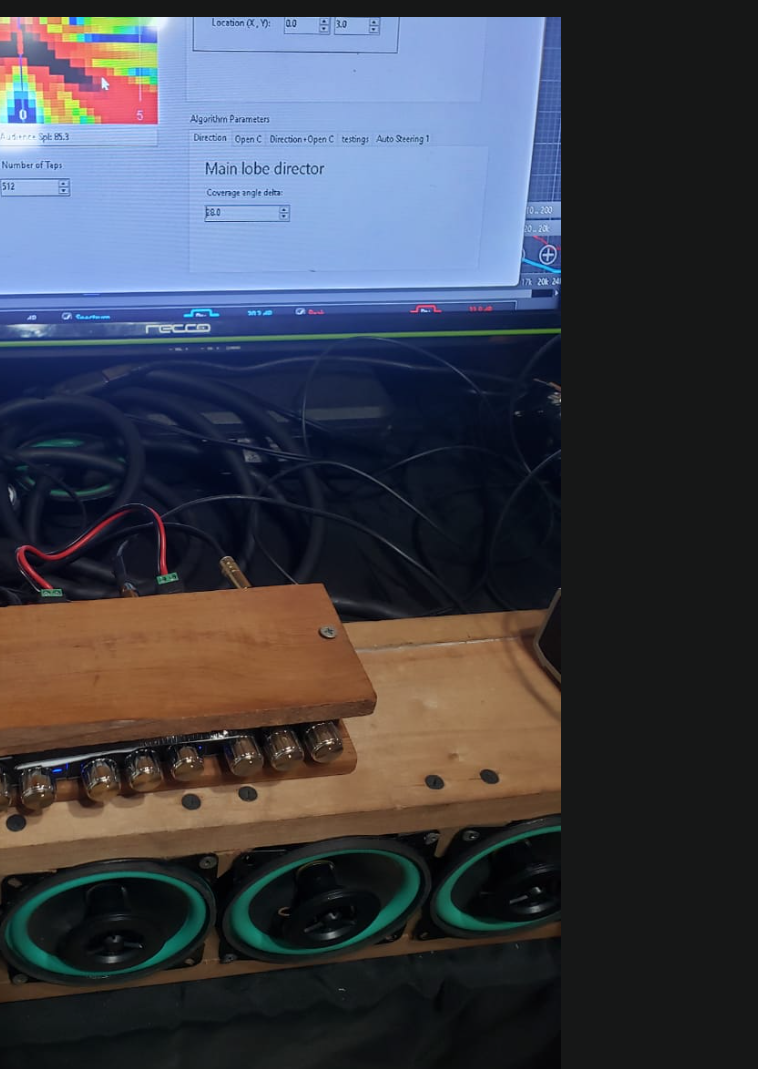
Images of the works — the day's bench, the day's listeners.
This entry is to show the simulator and one of the examples. Basically comparing natural coverage vs. a directed approach. Fast in theory, this was the thing to look at:
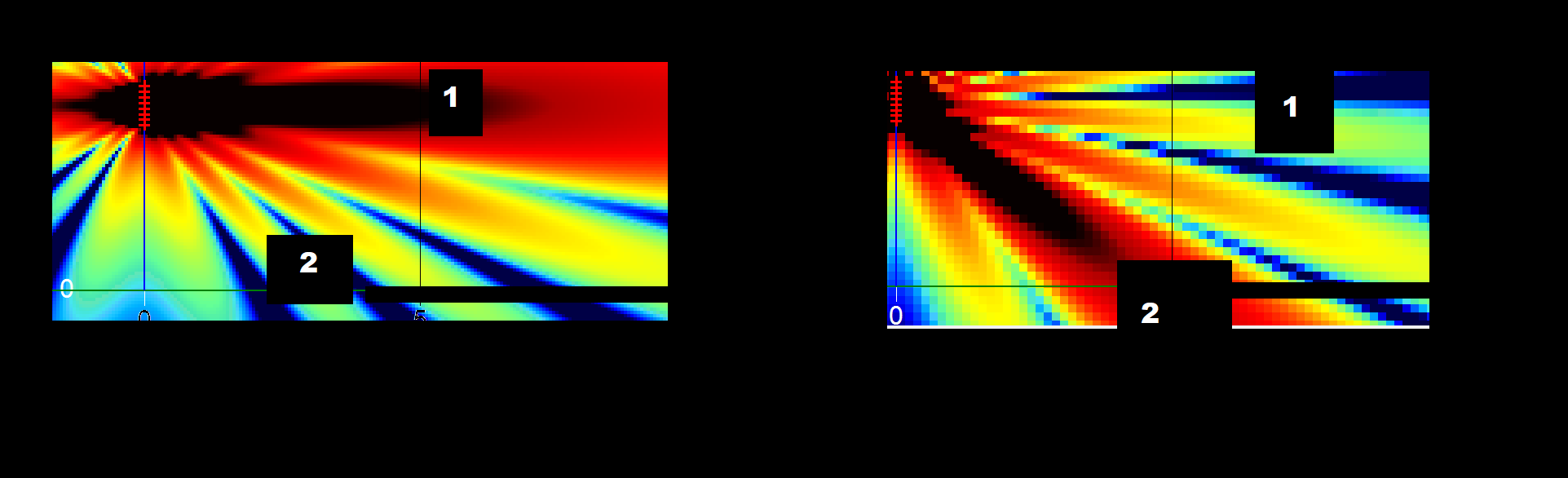
First image: "natural" — all delay = gain = 0. Second image: a simple steering created using different delays on each source.
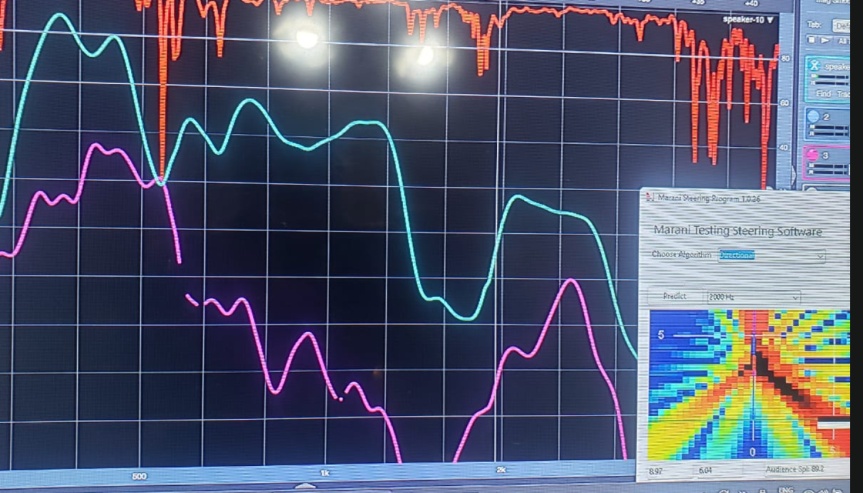
Measurements. Position 1 vs Position 2, when the steering is done. Up to 20 dB of difference.
Up to twenty decibels between two listening positions.— from a simple delay table
I also measured the seriousness of it by capturing, one by one, each transfer function.
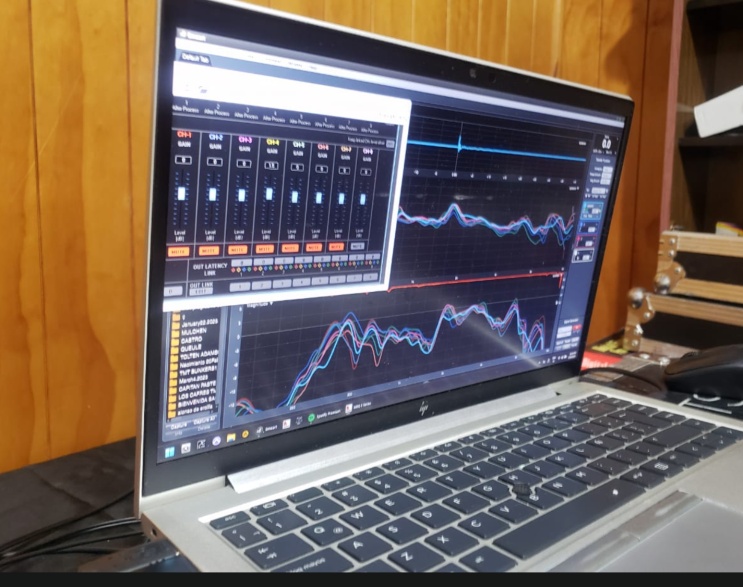
Each source — its own transfer function, captured alone.
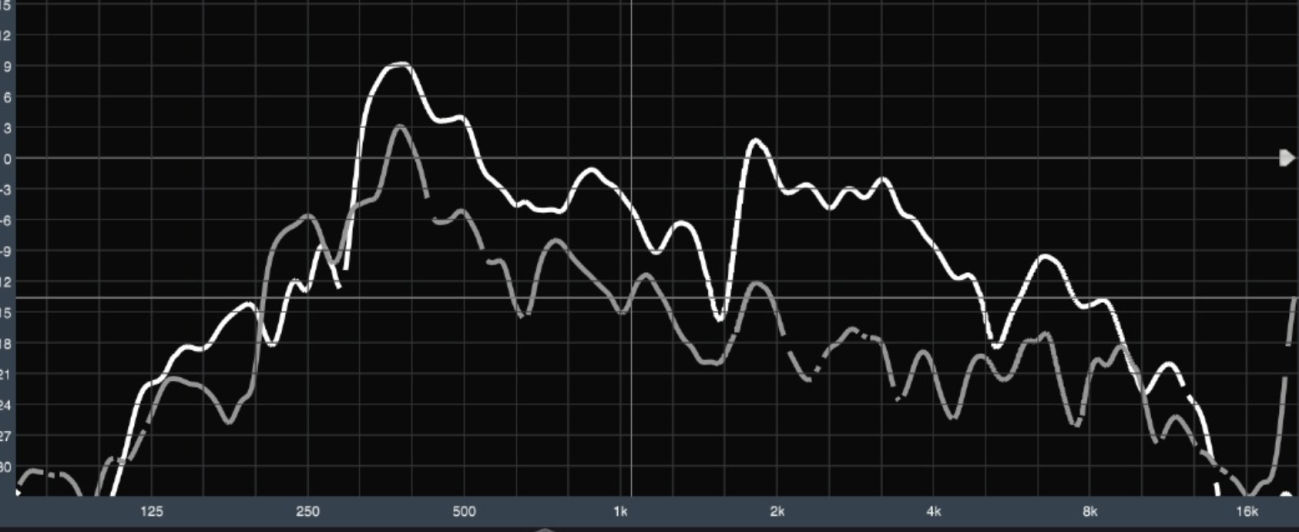
Another source, another transfer function. The raw material of every algorithm.
Frontal versus sided.
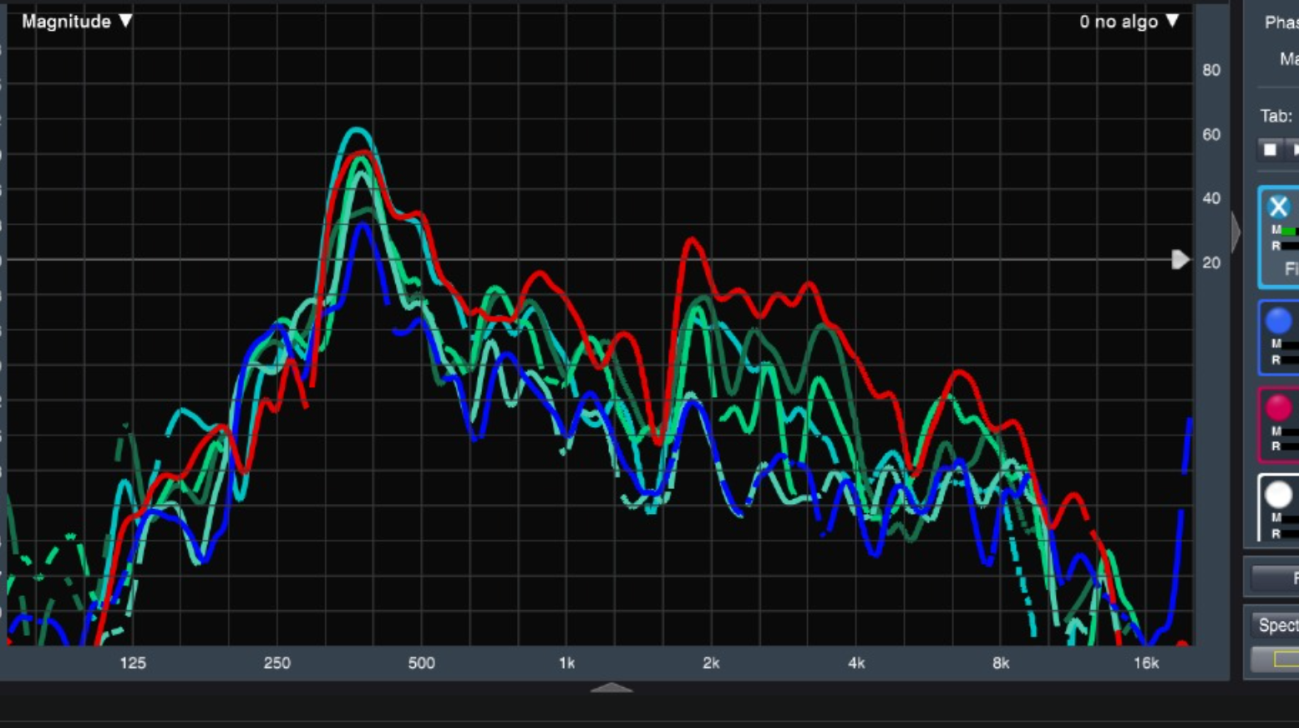
Frontal (1) versus sided (2) — in both situations. Red is the maximum of the "no-algorithm"; blue the minimum. Then we opened the coverage, and all the green curves settle inside those limits in a very linear way.
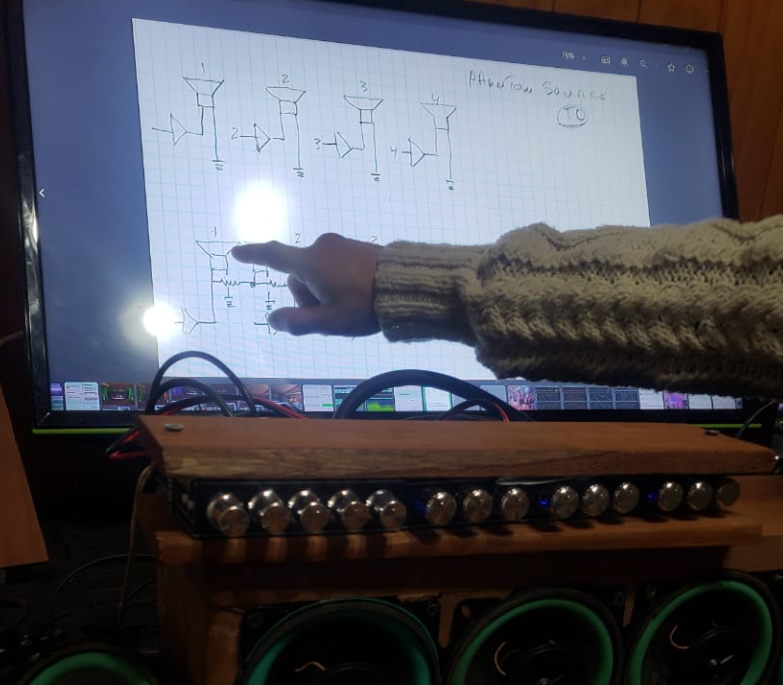
Cool image — including a hand drawing from Mr. Tom. Regards.
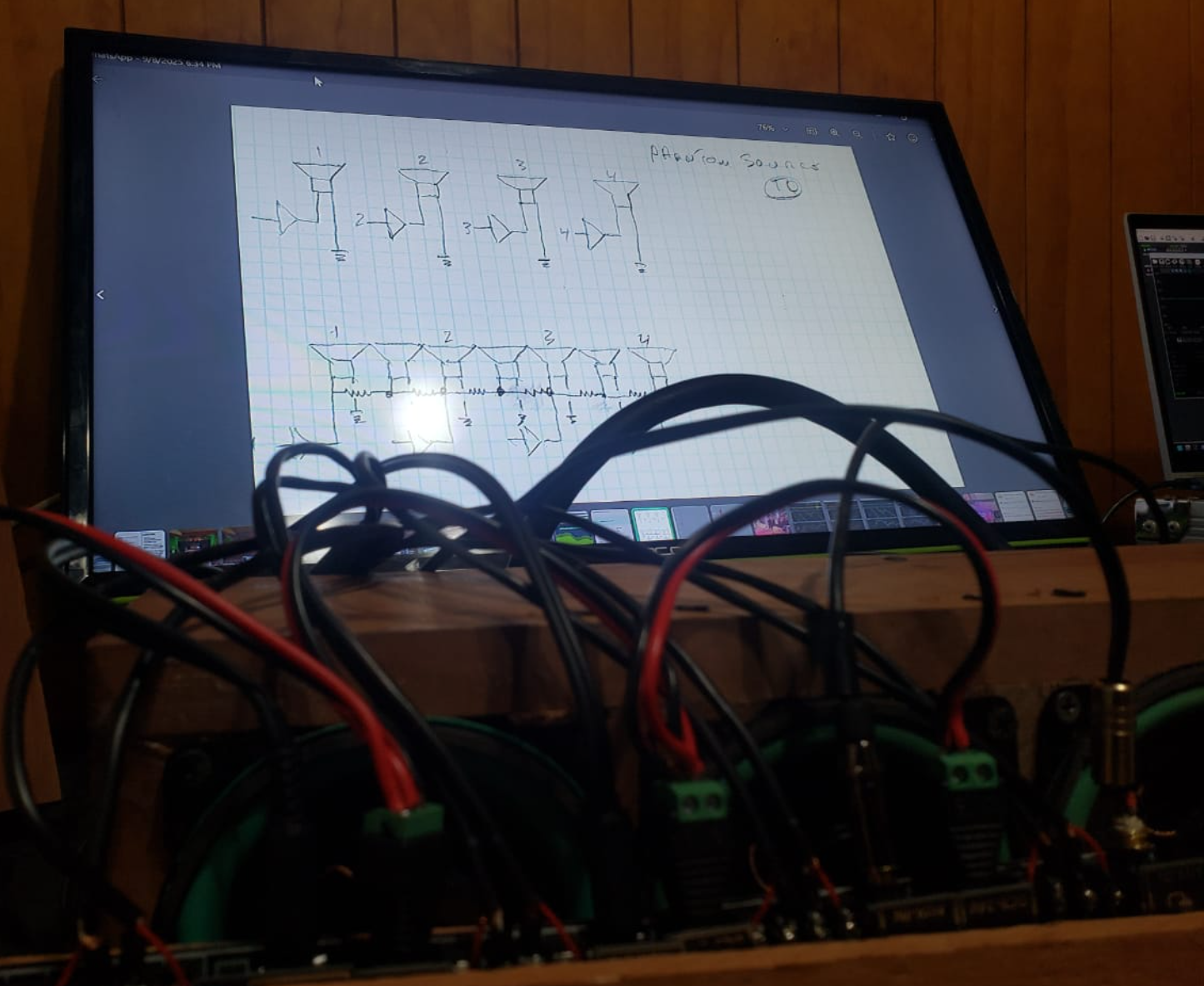
More captures from the bench.
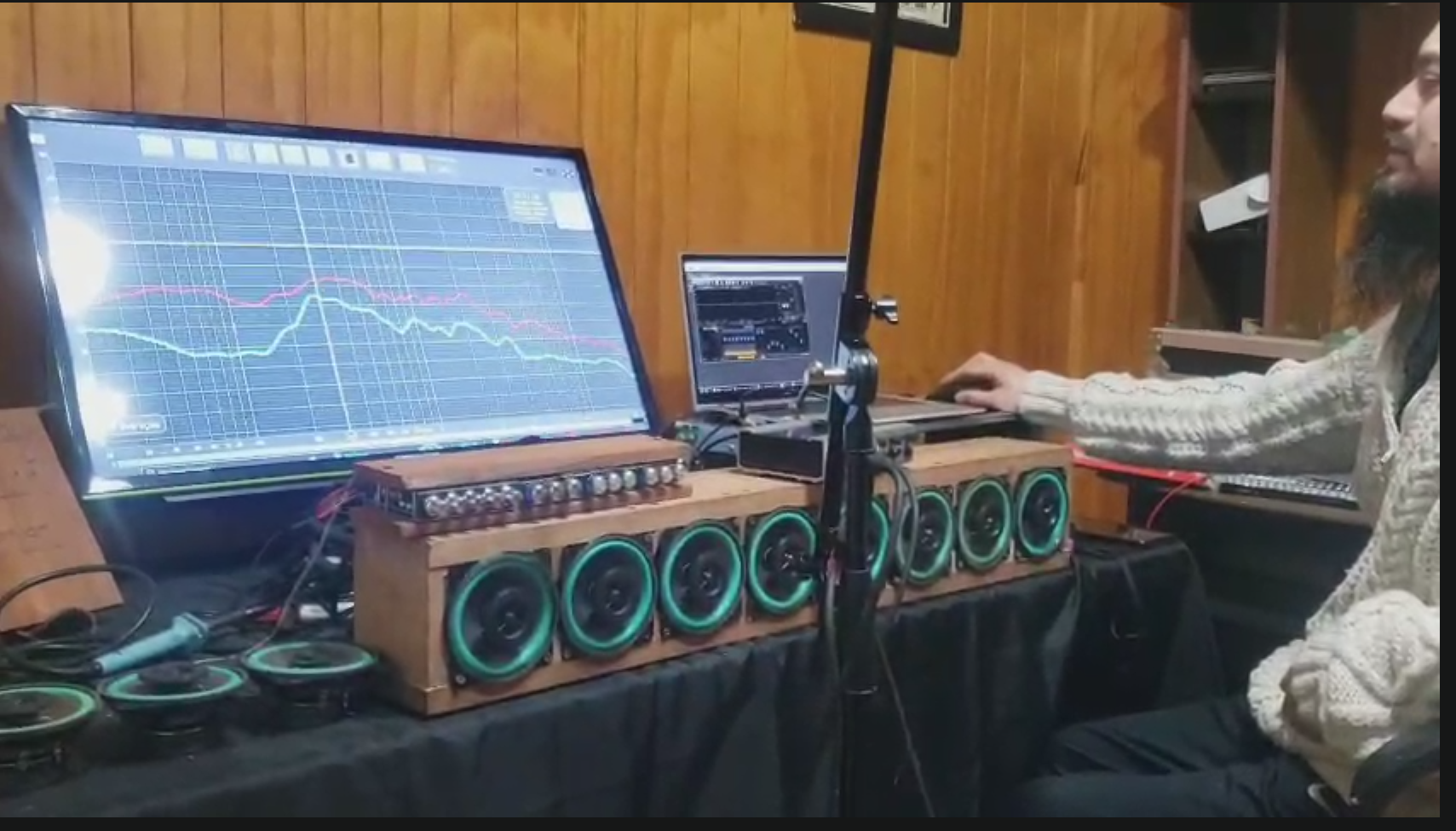
The growing pile of evidence.
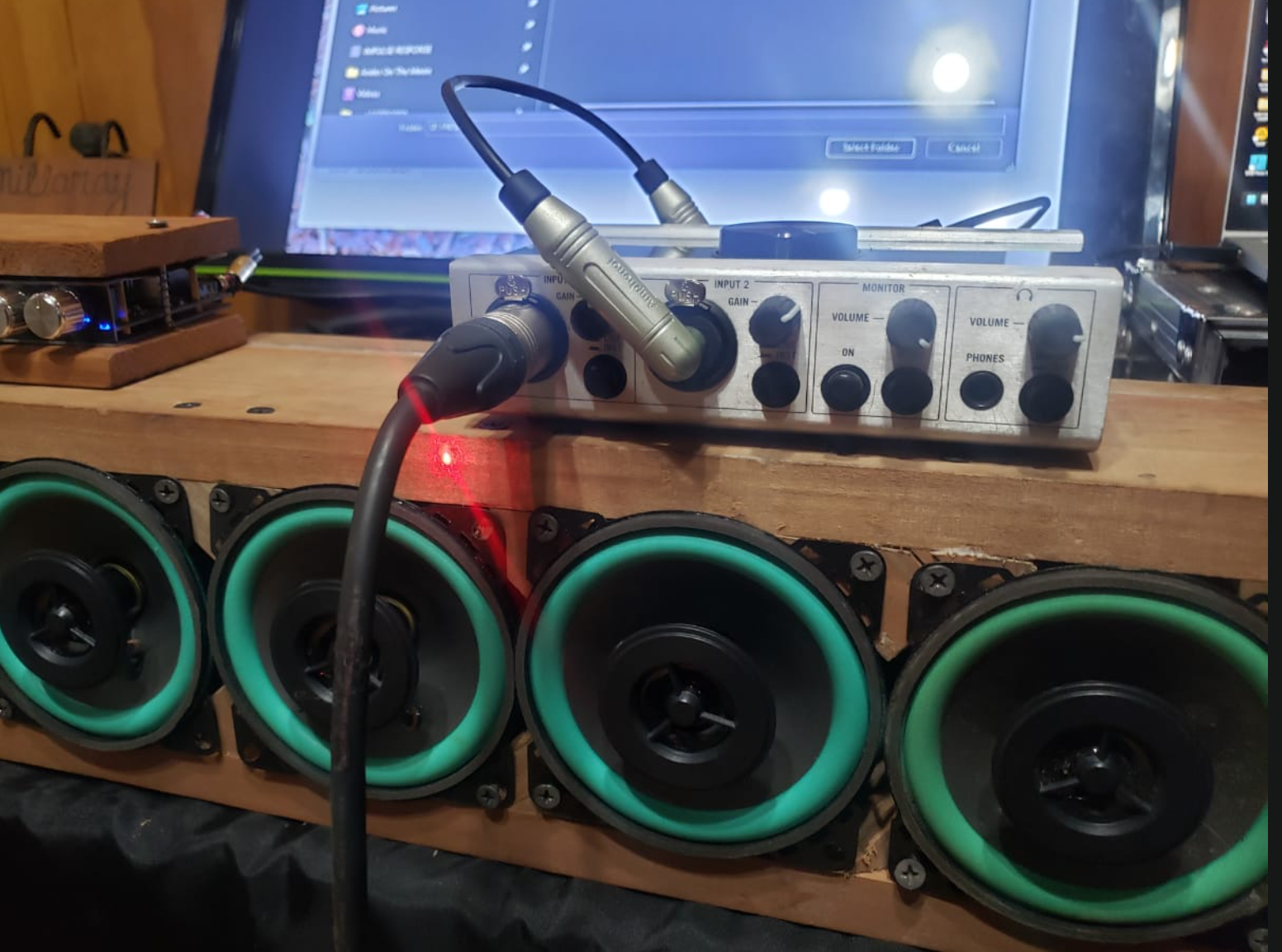
Same position, different algorithm.
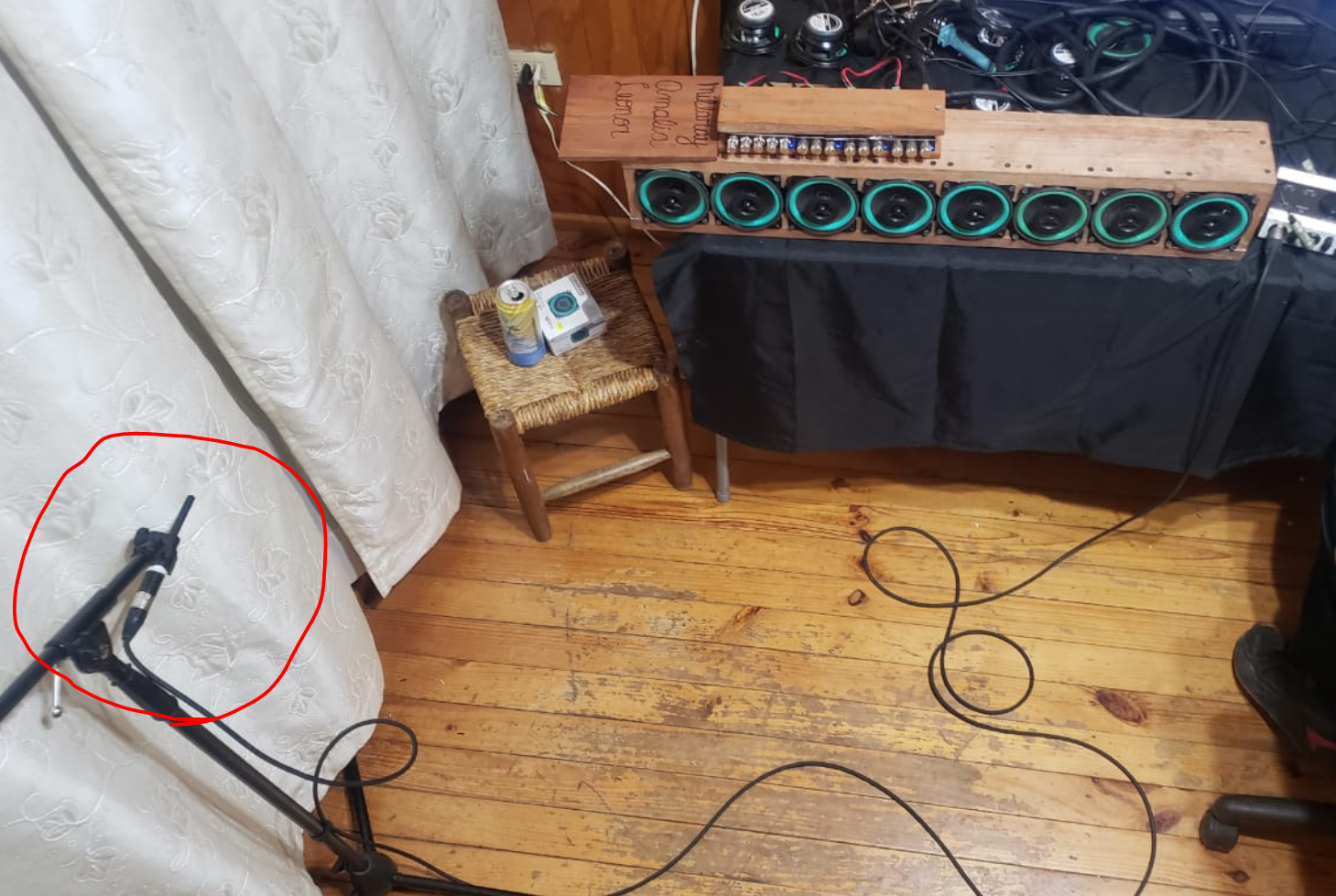
Simulation and measurement, hand in hand.
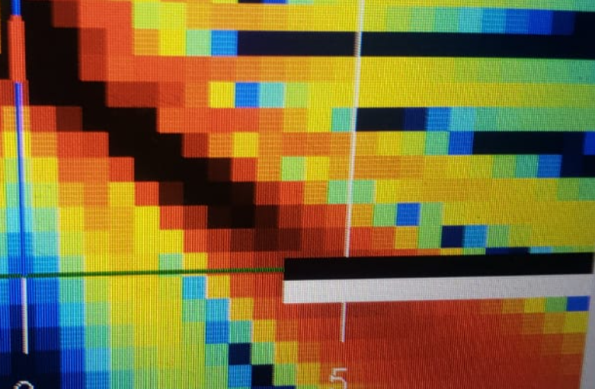
Closer still.
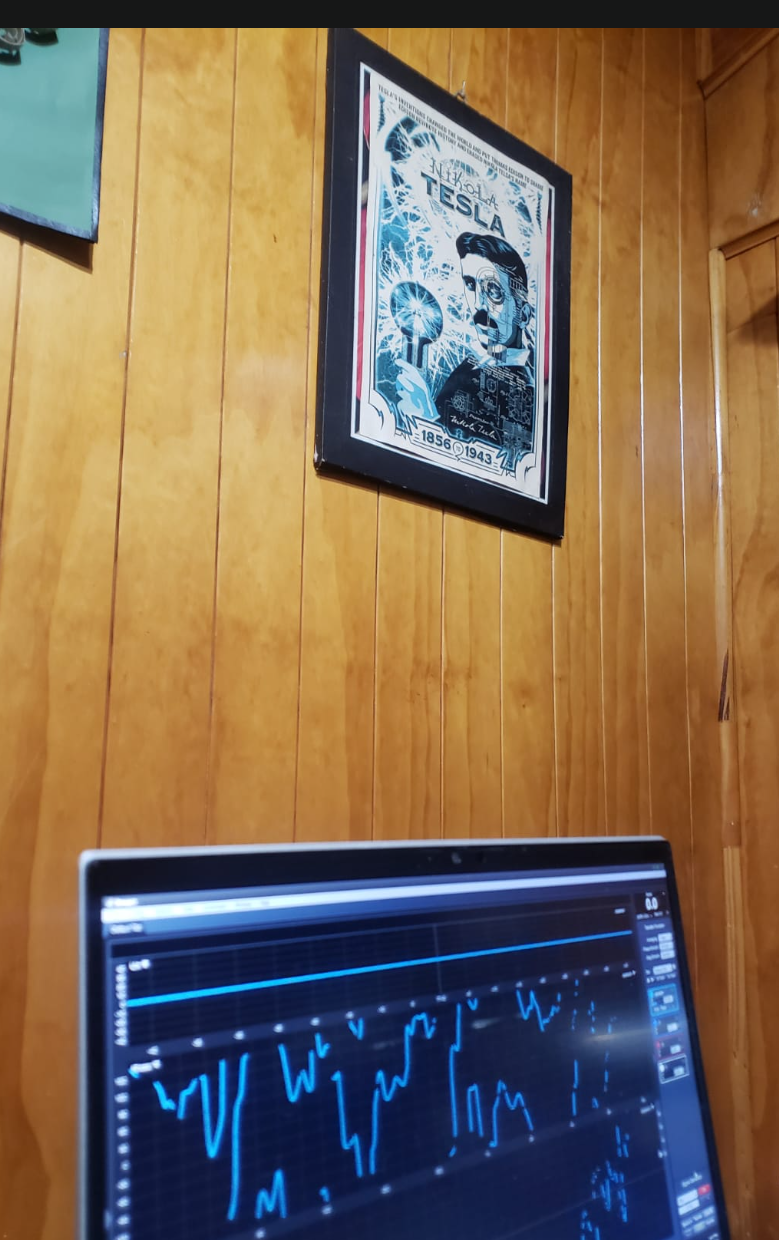
The last picture of the day — enough.
Till next.
— Sebastián.