Finally got to first attempts on measuring — with plenty of good results, as you will see on the captures. About the method: I used two of them. First, just to put the box on the ground and measure a kind of "side view" on the floor.
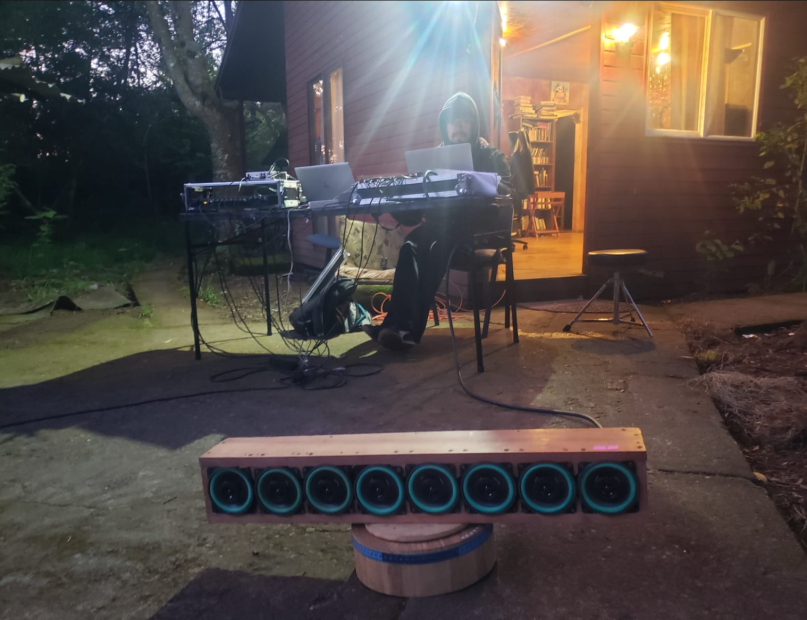
This way we get very near to anechoic measurements: the system is rotated, the mic is placed at 15 metres, same height, without reflective surfaces.
We also measured at normal hearing height — about 5 feet.
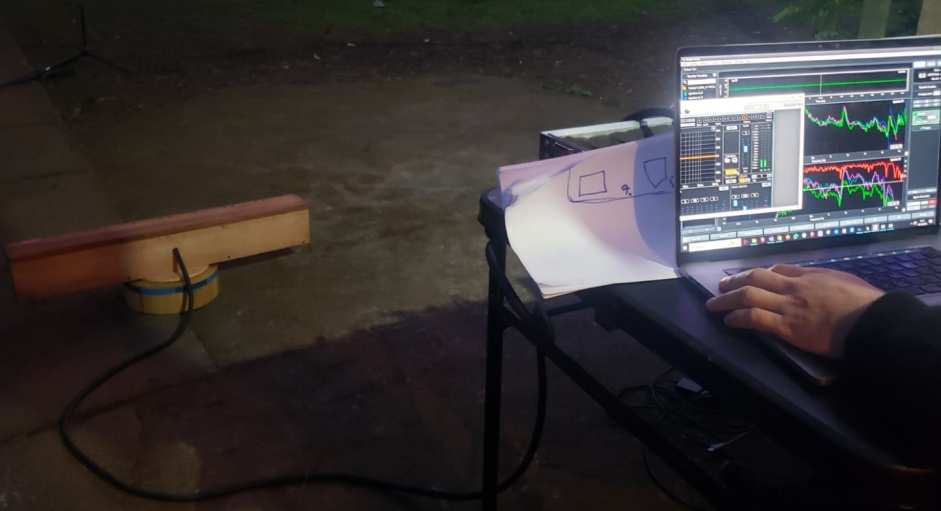
Normal hearing height — the everyday ear.
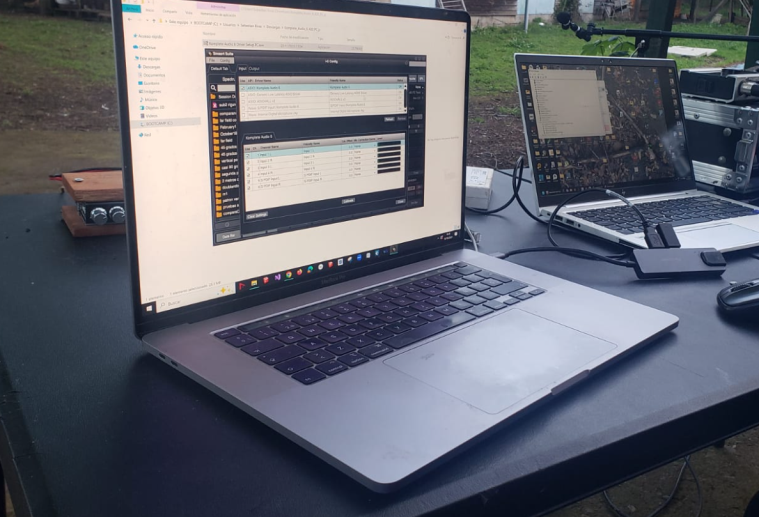
Setup overview. Trees around, no reflective surfaces, the honest air of Temuco.
The focal approach — −35° off axis.
Started with a directional approach — the focal approach.
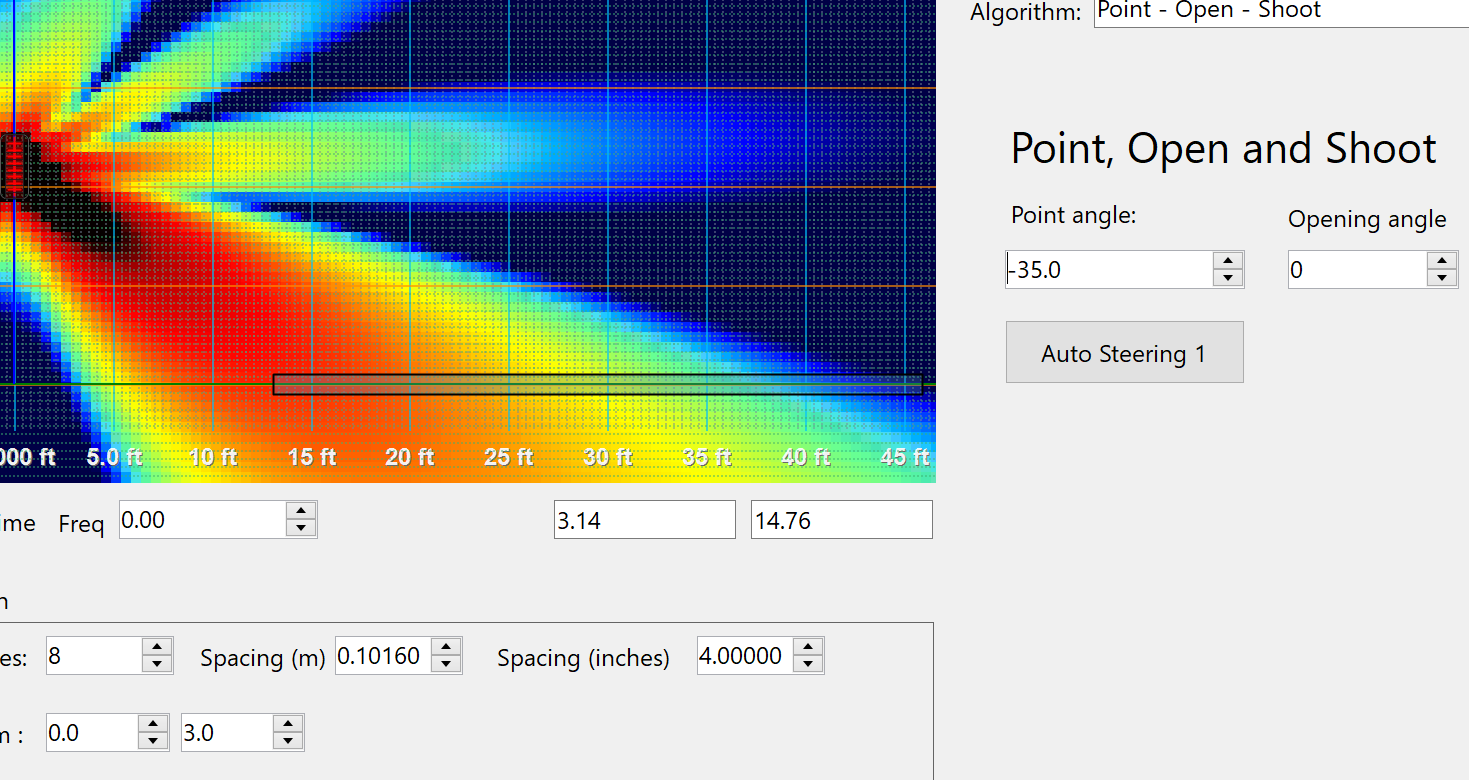
By the way — this is the official research tool for Danley, 2D this time. We were pointing at −35° off axis.
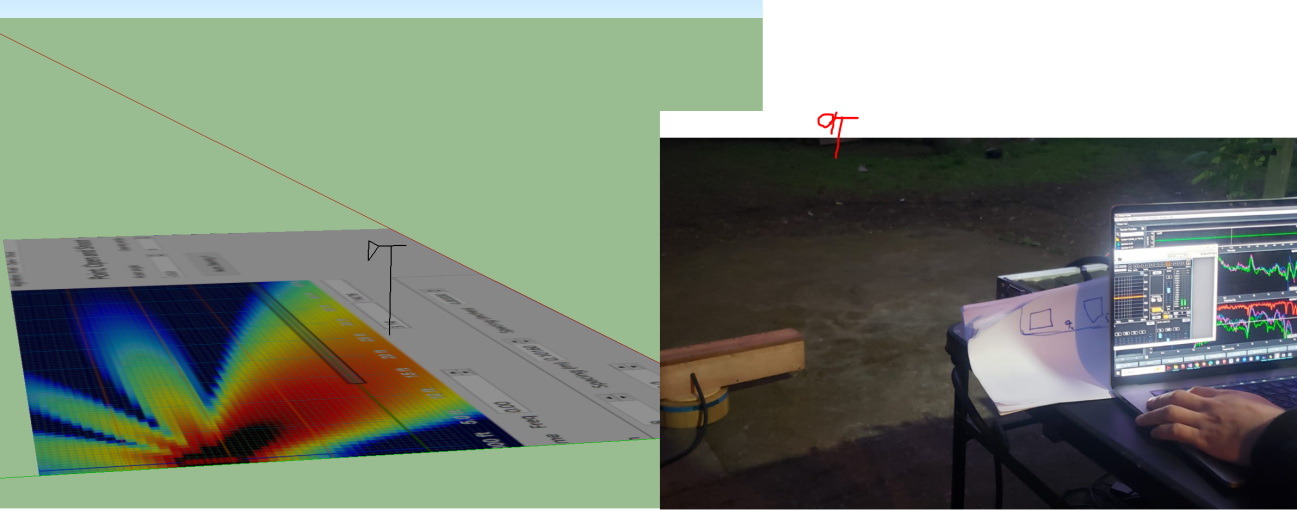
So in our way of measuring, we would be standing here — a direct line to the beam.
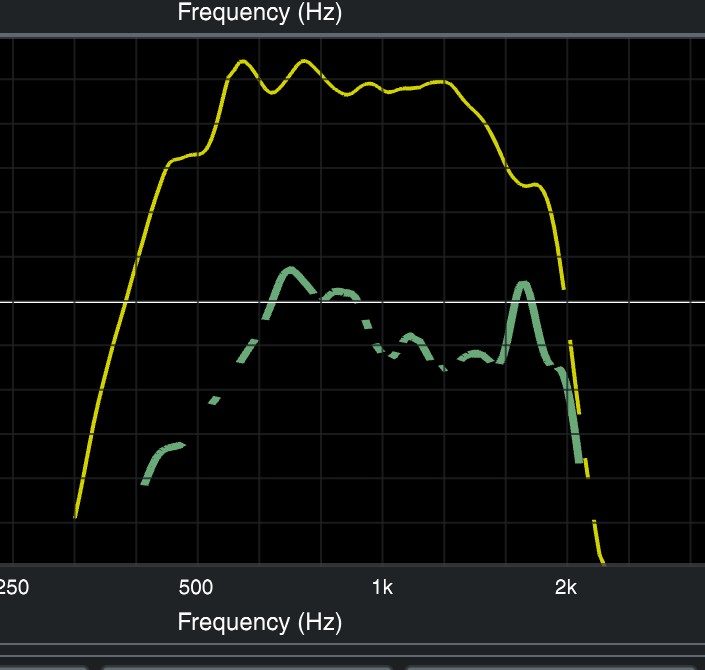
Measurement result — a very narrow band, but going to 18 dB of attenuation.
On 4 kHz and 250 Hz, theoretically we still have difference at 35°, but due to the directional drivers, the polar balloon was noticeable and kept us from fully appreciating the thing. We measured the polar balloon of a single driver, and it was nasty. But — look what we got at the sweet-spot frequencies.
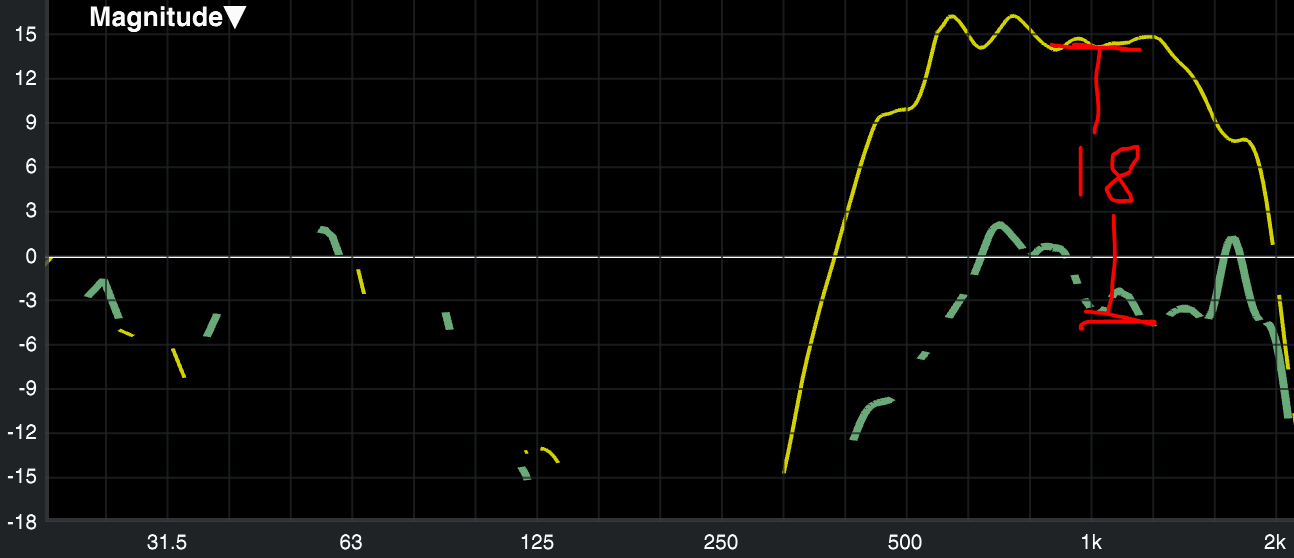
Yellow is −35°, green is 0°. It was a very sweet sensation when the sound was filtered to the sweetest frequencies — to walk around and find yourself losing the M-NOISE as you approached 0°.
For me, the subjective experience of sound always becomes more and more important. What we measure, versus what we hear.— on the walk toward axis
Mid-hi range — natural response.
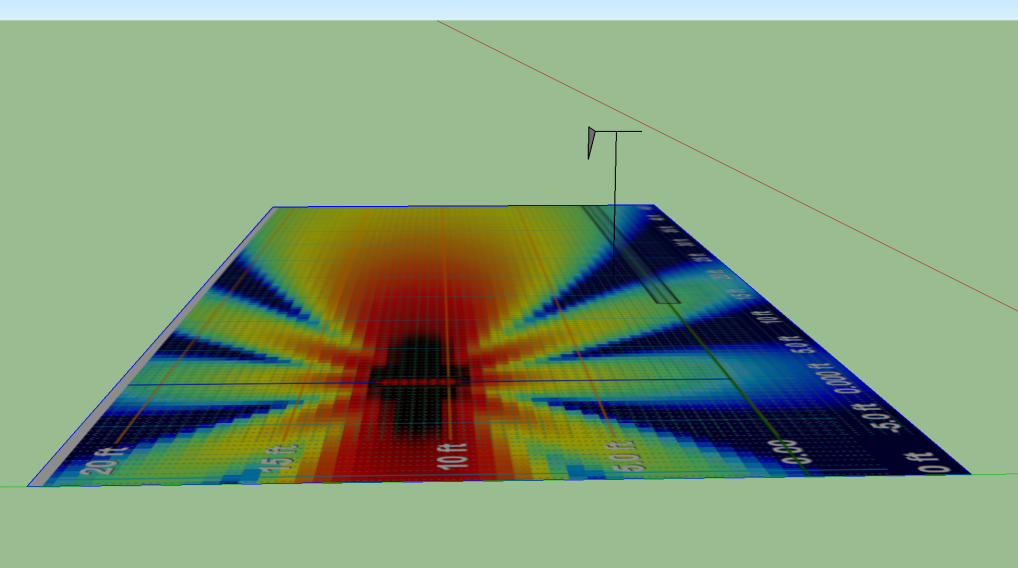
We measured the mid-hi range spectrum with the system in no-algorithm mode — the natural response. On the Danley simulator we see this:
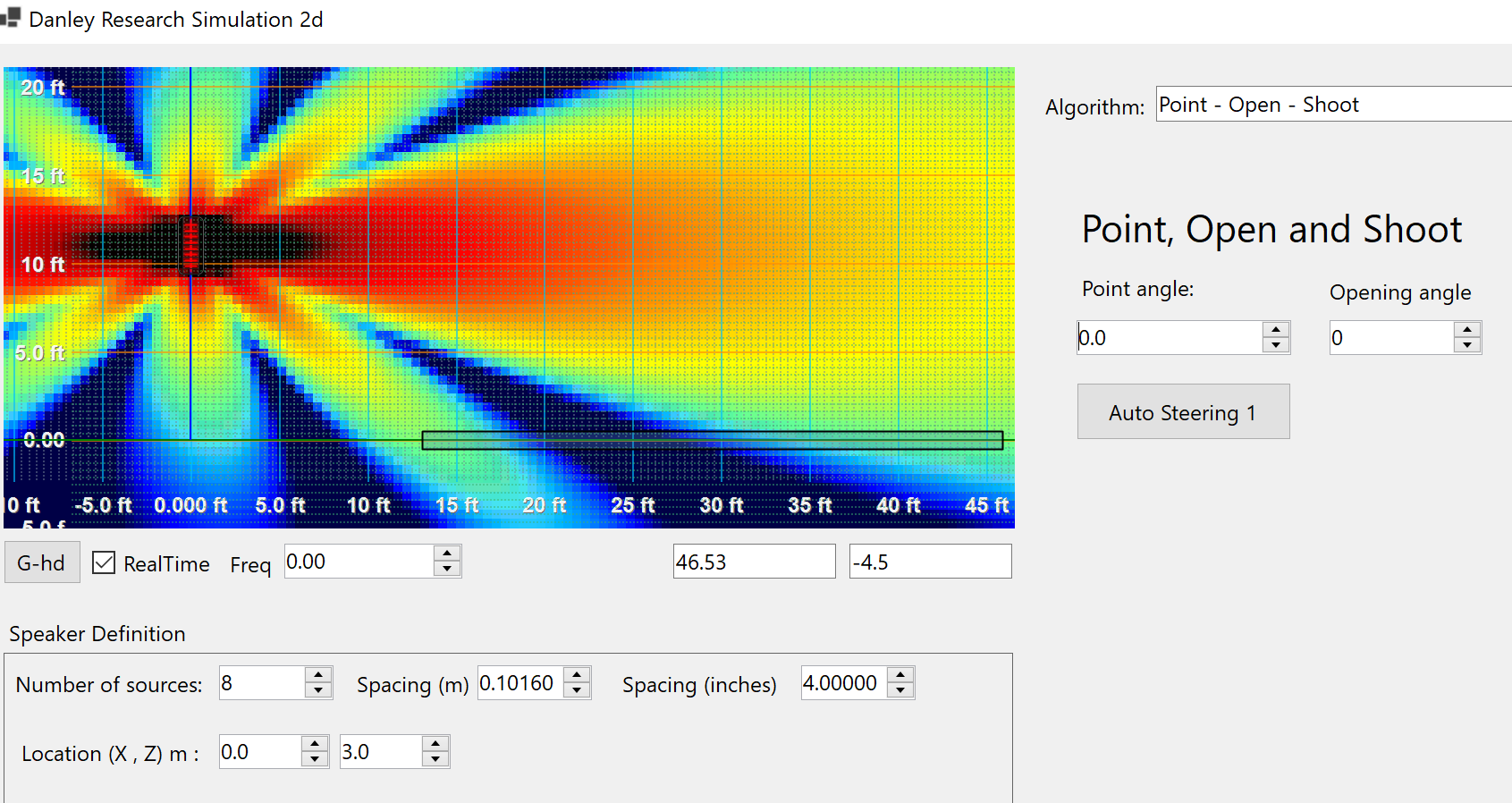
Simulation — natural response of the 8 × 4" line.
Measurement — natural response from the field.
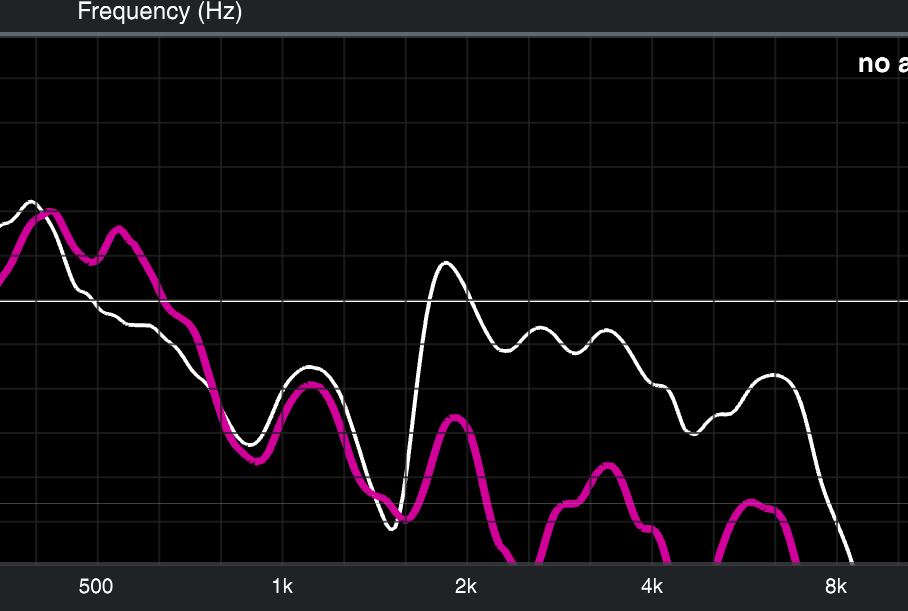
0° vs 35°. The system remained omni up to 1.6 kHz — after that, directional. As expected, and even more due to the directionality of these drivers.
I was thinking on sending some images to Alison to do CAD, preparing a means for you guys to have a unit there to test — specially Tom. (We will also talk about the end-fired cannon.)
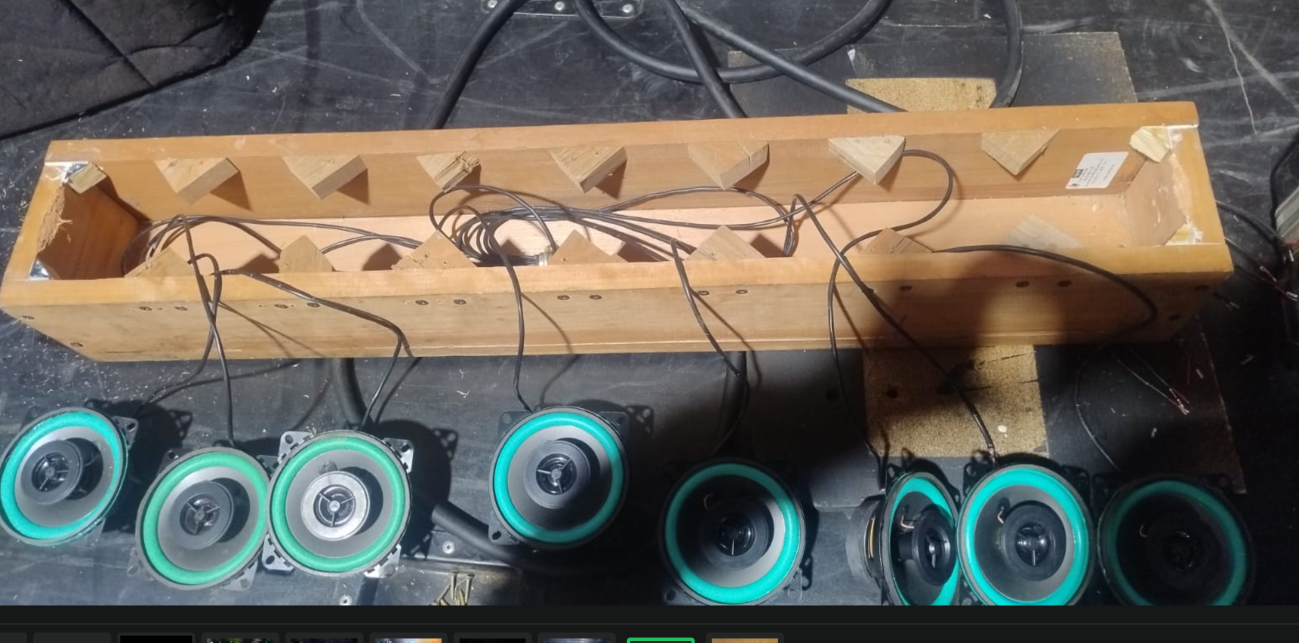
I bet you got the idea with those small triangles for the driver fixation.
Pointing the drivers to the sky.
At one moment I wanted to hear only the acoustical summation of the sources — and not the inner polar pattern. So I started to measure like this.
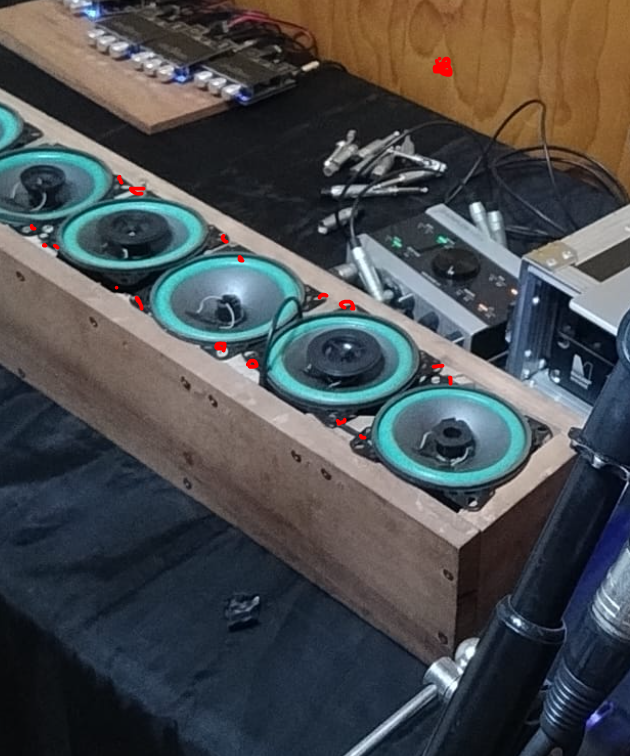
Drivers pointing to the sky. Keeping the mic at low height gives us a much more "omnidirectional" response to study the interactions.
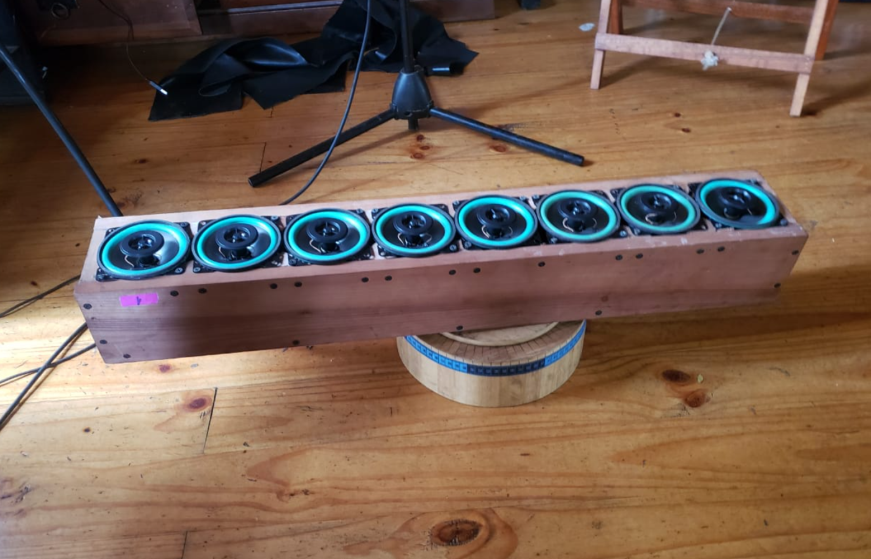
Important — to be off-axis, and to maintain the angular distance.
With the idea of pointing to the sky, end-fired also became much, much easier to do.— the method generalises
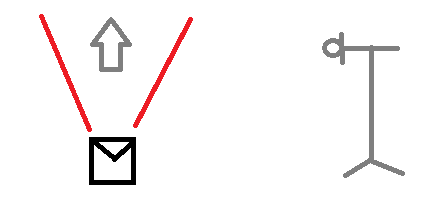
End-fired, much easier from this orientation.
We also noticed that the best "sound" response was with a convex array — "opening the coverage".
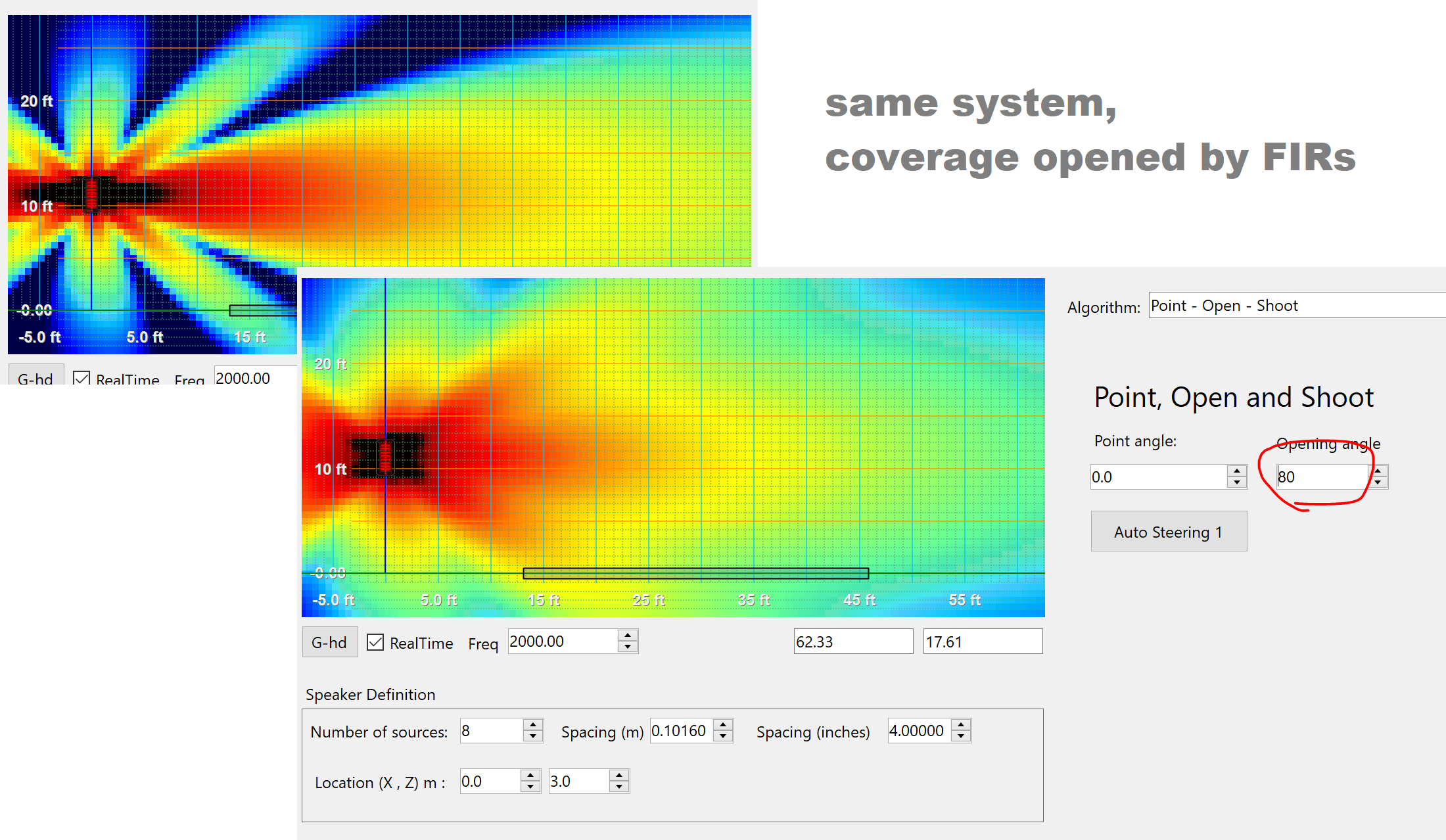
Convex — the shape of a gentler beam.
So now I have the unit in my hands with the Marani processor, so I hope this week to do massive measurements — specially end-fired, just curious.
See ya around.
— Sebastián, 10-14-25.