Since sound is a 3D event and directivity is achieved with a dimension compared to wavelength, wouldn't the "ideal" source be a 3D array of sources — in X, Y and Z — as well?— Tom's question
I freaking love this idea. Maybe something semi-spherical. And also your idea of a surely dedicated source for the task.
On amplitude shading.
Following the logic used in the NAVY sonar that was used to design the CBT (Don Keele), it is probably amplitude shading, in addition to the time, that will give the best results. I also think so — and practically I know about this. I am leaving it for next stages, but surely amplitude shading is an important factor.
I don't like it very much, because another manufacturer I worked for used even up to −12 dB on one driver, which is not too efficient — and efficiency is a Danley trademark. But we will study it. I think to start with a deterministic geometrical approach for the delays, and amplitude shading as a brute-force attack on different combinations — or AI — to look for the best.
Now, what does "the best" mean? It is like we have to determine an audience area and get statistics out of it. Living Audiences is an old idea that makes great sense, and I have ways to improve it by means of thousands of computer iterations — to tweak the numbers the best way possible for the audience's taste.
Center-to-center spacing — the rule.
In any array, the center-to-center spacing is a key part in how high it holds together. Do you know what the rule is?— Tom's second question
I think it is a matter of compromise — and, just as you, I think it is key. At the moment I don't have a clear response, to be honest. But half a wavelength is a very good practical rule of thumb.
I always do things the most practical way — so I try not to get into too many formulas, but into real situations based on simulation and trial and error. I have real faith in simulation, so I am better at learning chunks of data instead of formulas. But we will dig into this, because it is the science we are developing. (Not to mention your discovery of the hard time this will be for less than a lot of taps.)
We also saw a way out: Linux's BruteFIR is an example, and after profound research I found all kinds of clues that different developers each make their own efforts. BruteFIR was absurd in its speed — incredible, and that was ten years ago.
EAW Anya and the shape of the road.
Are you familiar with the EAW Anya? They did extreme, precise vertical 2D beam steering. Also they are old now. They were using dome highs, I think separated by one inch from each other. 3D waveforming is a similar animal — but much more precise, and with the "magic" of getting the drivers separated a lot more than one inch. They also say openly that the system is a Linux-based own thing. Partitioned convolution is the path to the V2 of our system.
For now I prefer to give examples of real use, with "normal" separations we could have. That leads to the idea of a 2-way digital speaker. A rule of thumb would always be: get the drivers as close together as you can, then analyse and program for what kind of FIRs, IIRs or other techniques will be used.
The Patriot Horn.
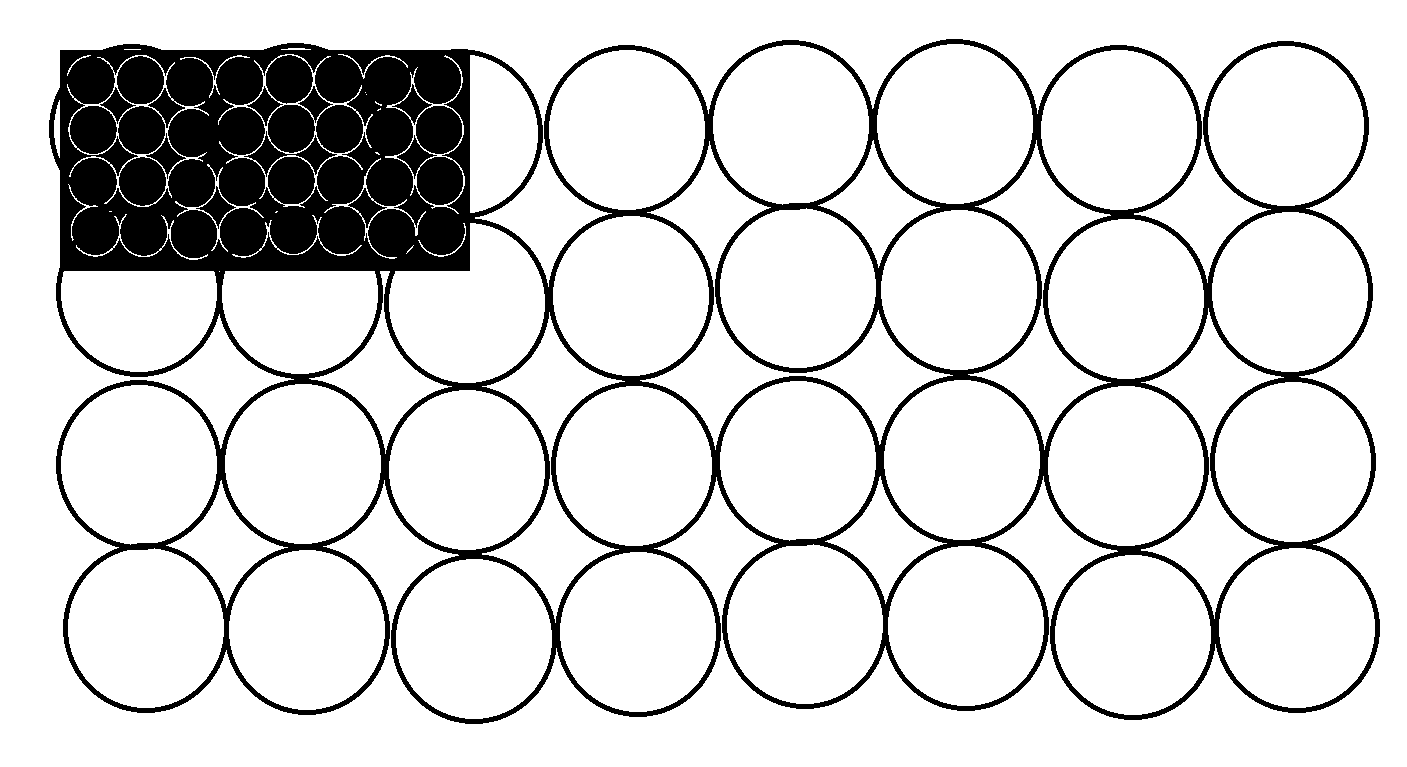
Scaled, this is what a 2-way second-generation would look like. It looks like the US flag — hence the affectionate name: the Patriot Horn.
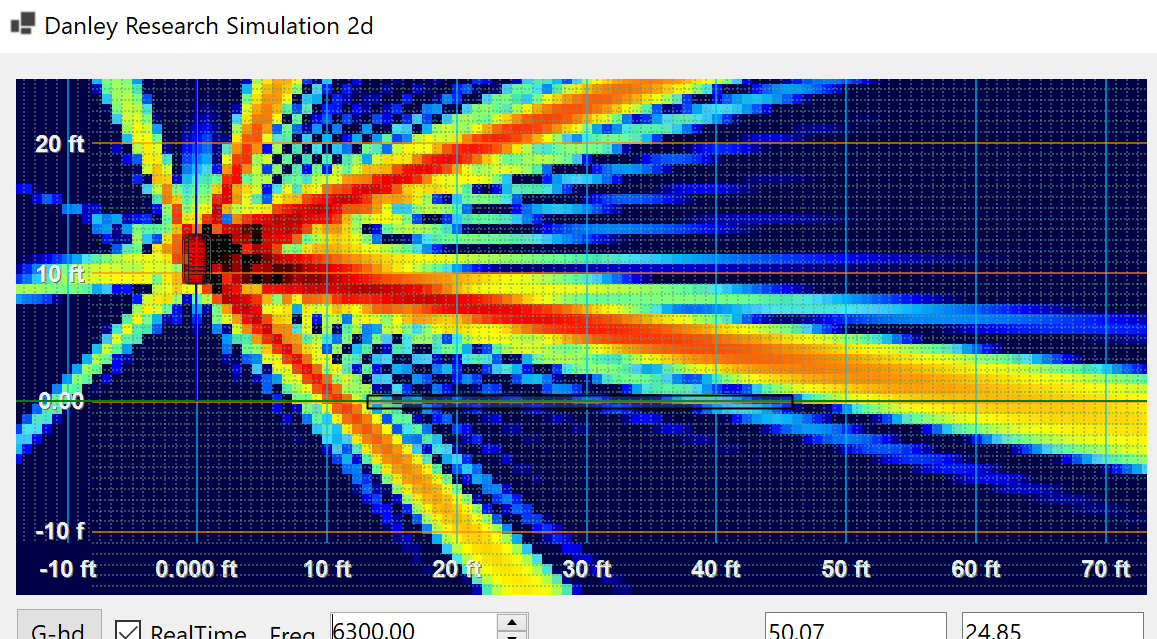
6.3 kHz for 4" center-to-center. Bad.
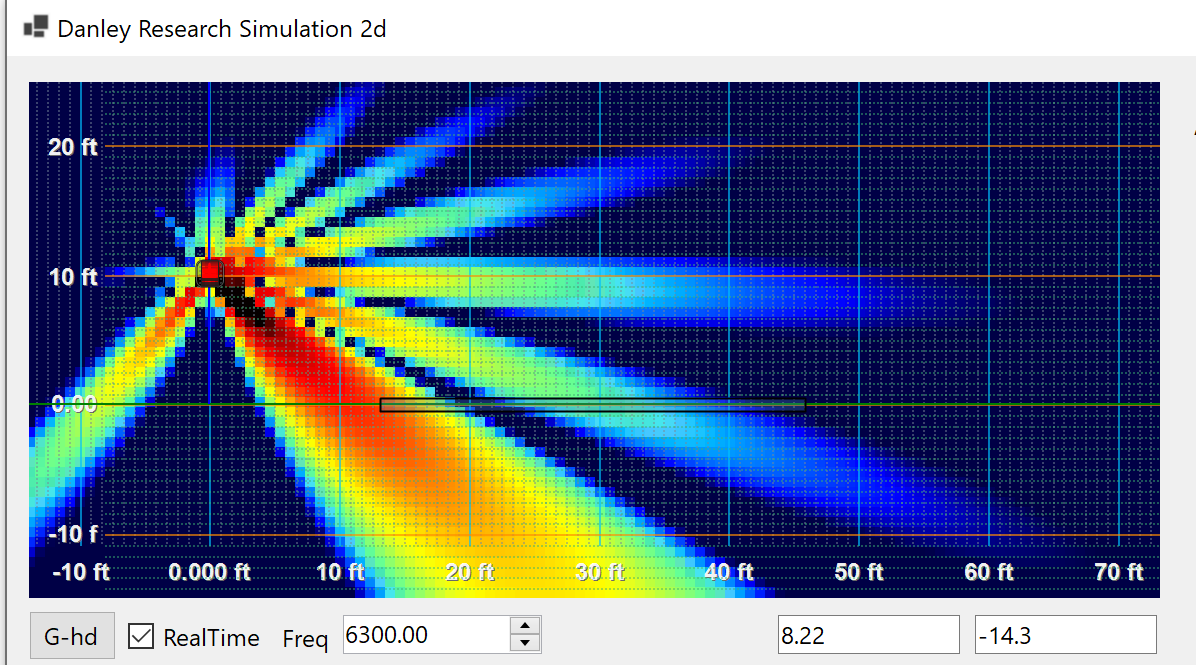
Same exact algorithm, for 6.3 kHz, but with 1" center-to-center. Maybe less, maybe more — as far as the center-to-center thing is physically possible.
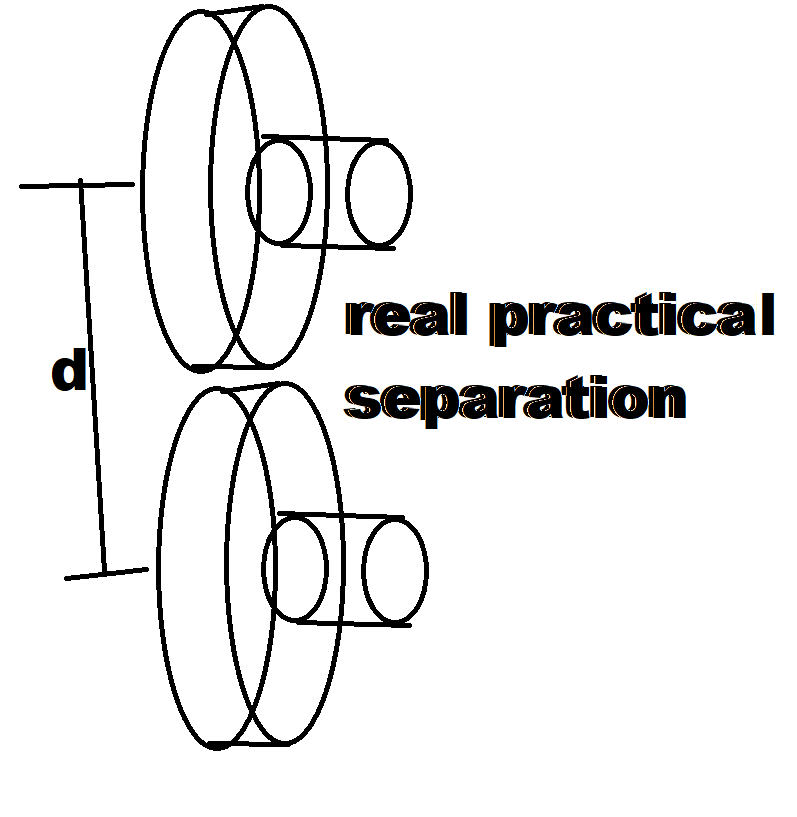
We are again with a little odd — we know how the side view of a typical compression driver looks. I feel like maybe some magic can be done, or at least thought of, toward how this could be achieved.
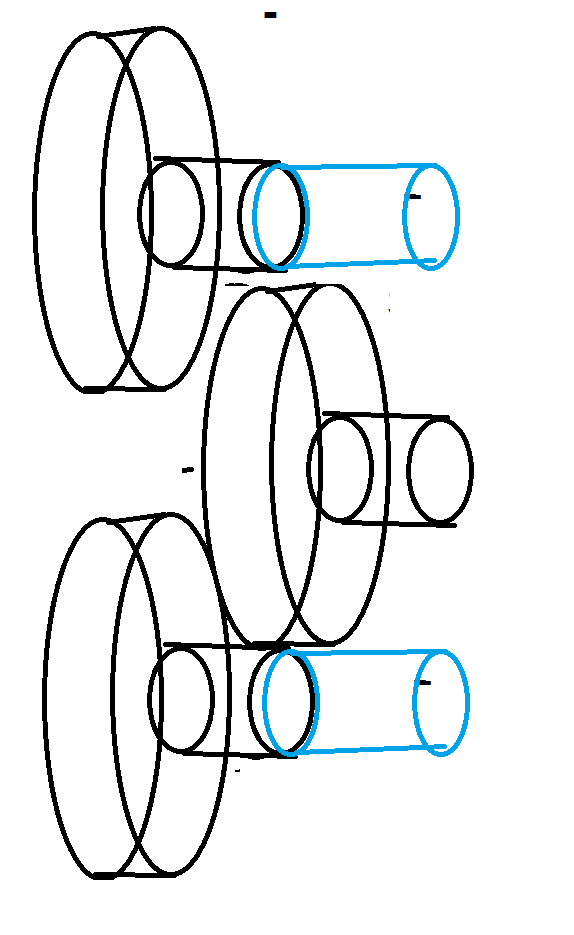
I'm so silly. I don't know much of power rating and stuff — but if the EAW guys did it, why can't we? Also, on a first stage, we are thinking about small to medium rooms.
Scaling — Flag 1, Flag 2, Flag 4.
Keep it dreaming. Let's see how this idea can be exploited for more output without breaking the separation — from Flag 1, to Flag 2 (+6 dB, lower control), to Flag 4 (+12 dB, more lower control).
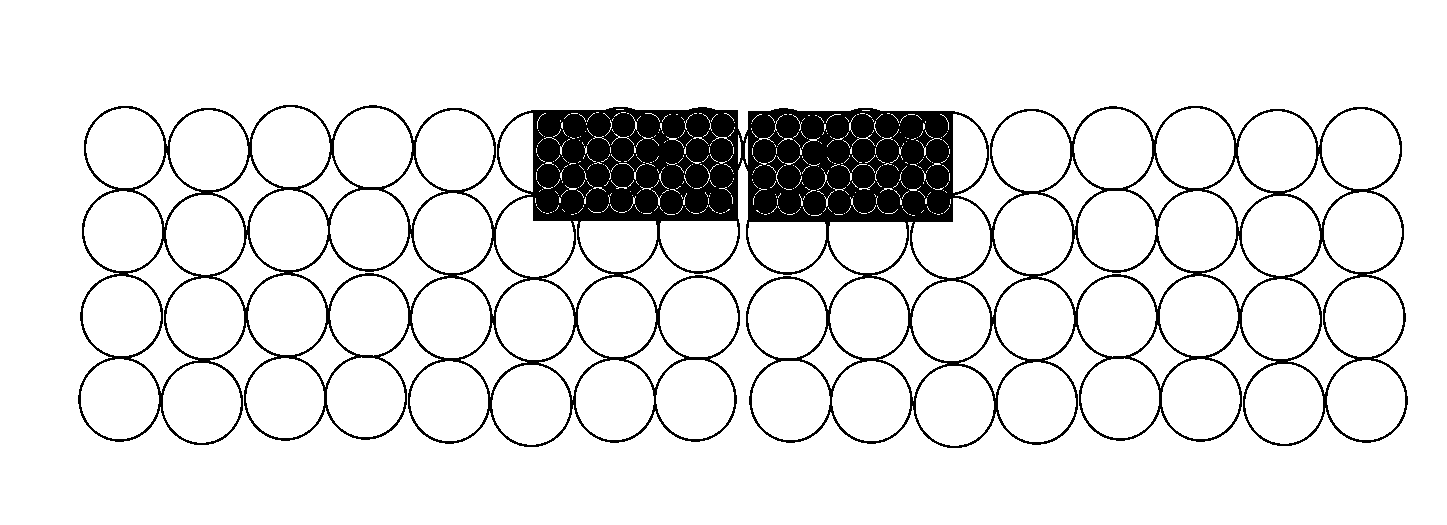
Scalable system — up to four units to start.
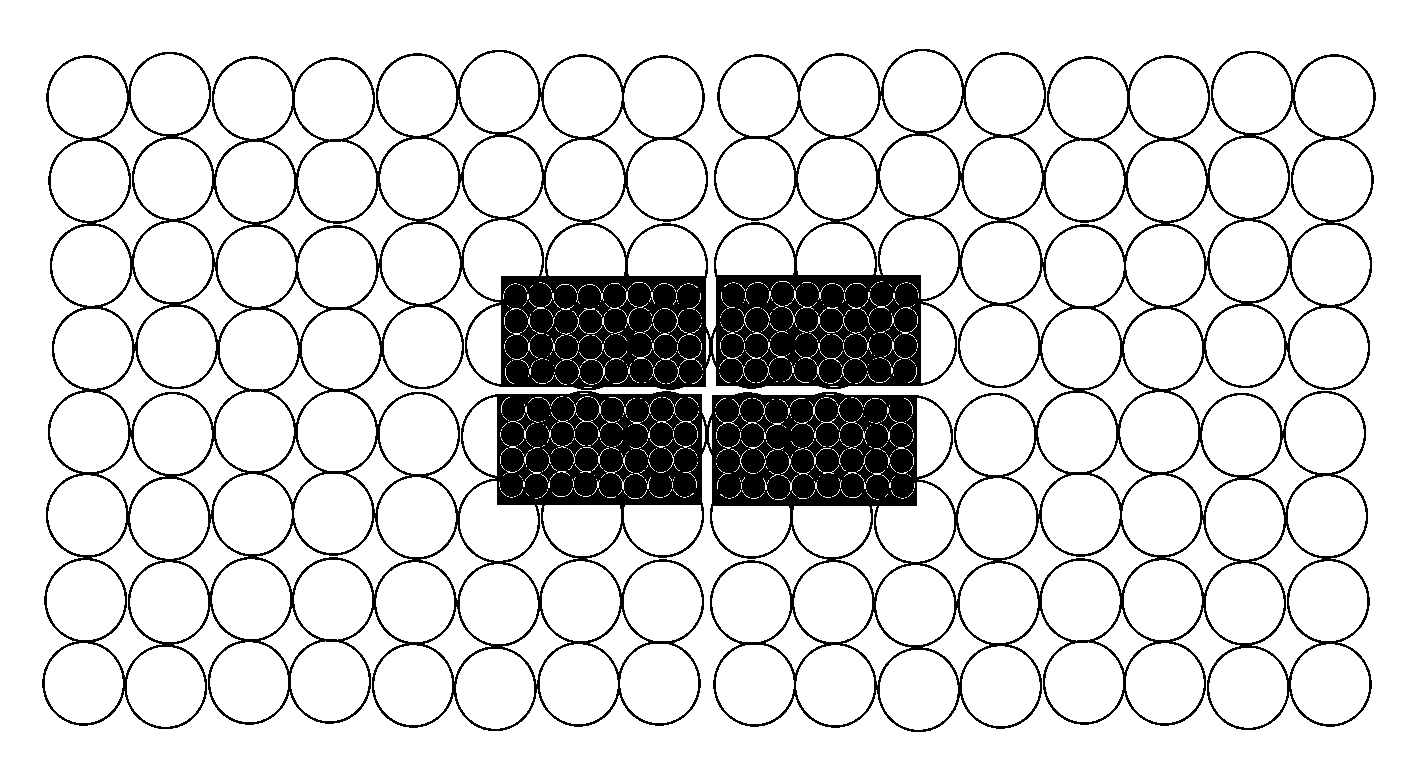
Four units, arranged so the minimum separation is preserved and the lows get the real benefit.
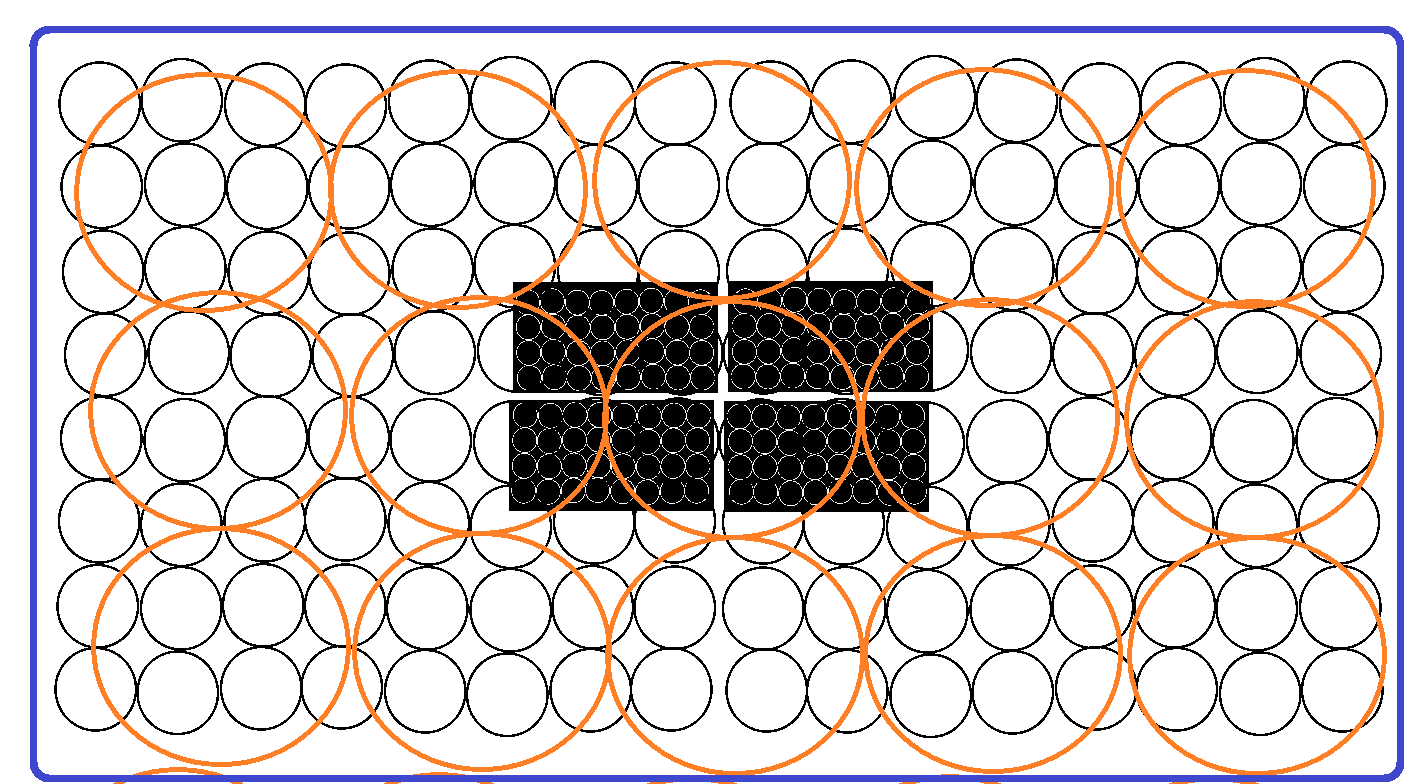
This big boy could also have low frequencies by means of a third way.
Back to your question — it is really difficult for me to know. The half, quarter, or one wavelength separation — I think we will really be able to tell using the simulation tools, and by measuring. It is also a little problem for measuring this kind of stuff, to get it into the Klippel machine. But maybe we can create a really small toy, like a 5 × 5 with 2" speakers, to start — and look at the frequencies it can produce and control.
I'm freaking loving us getting more and more on the same path.
— Seb.